
Rediscovering learning at home with parents and teachers
In an interview with educator Sangeetha Raj, we explore various facets of learning processes at home, and how important the learning journeys of adults (be they teachers or parents) are for the children.
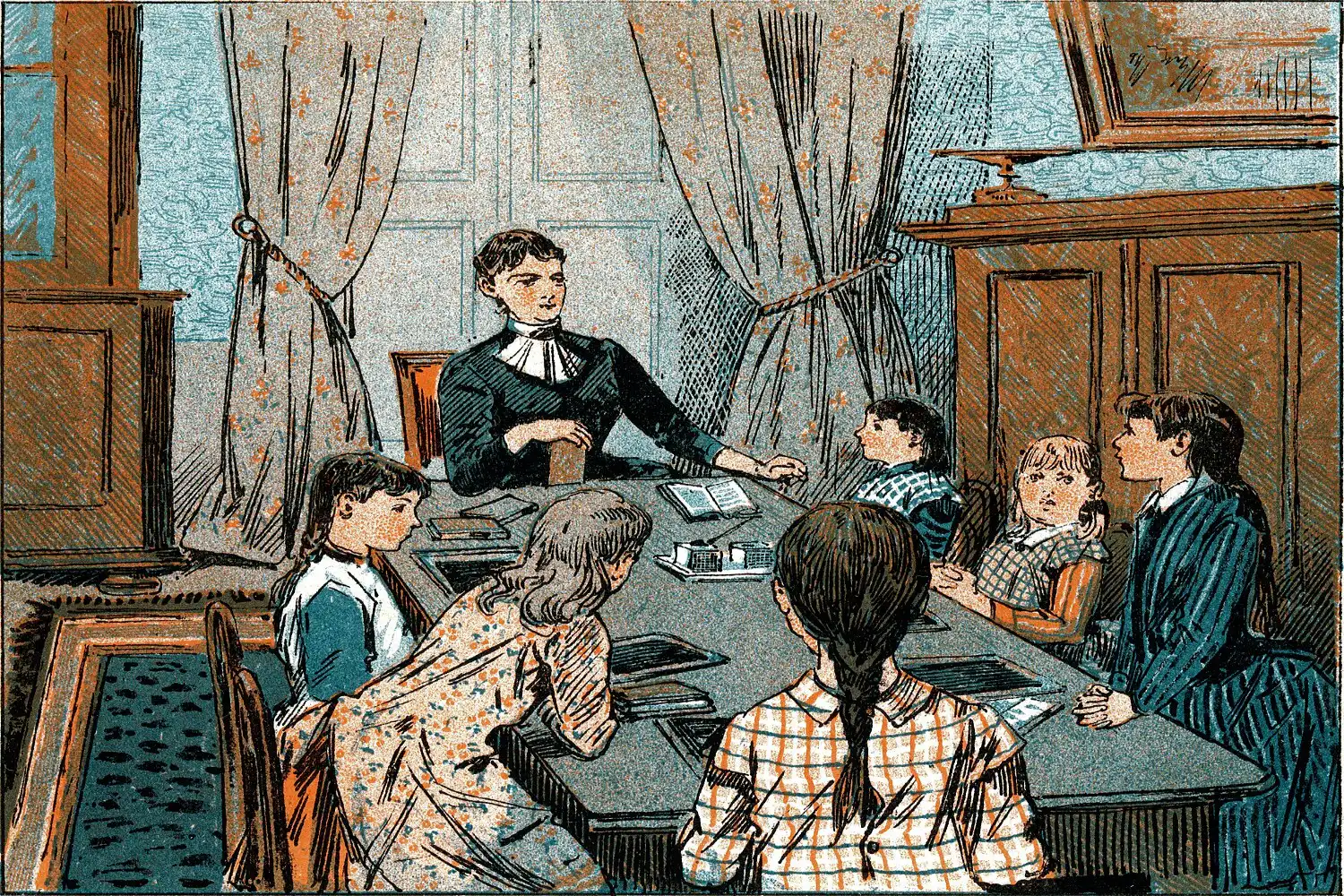
The pandemic has revealed the critical need for actively reimagining the home front as a space for learning. This time has called upon us to build an active understanding and inclusion of parents in children’s learning and schooling.
In this conversation between educators Sangeetha Raj and Thejaswi Shivanand, we try to capture some aspects of the home-learning space and its relationship to school and teaching in schools.
Sangeetha shares her experience and thoughts from a long career working as a schoolteacher, a homeschooling parent to two children, and as a teacher-educator. Sangeetha and Thejaswi were colleagues at the Centre for Learning School for two years.
TS: You have had an unusual trajectory as an educator, working with a range of educational settings. Can you please briefly share your journey with us?
SR: I began my work with a fellowship from CRY (Child Relief and You) that supported me to work at Kanavu School for Adivasi children in Wayanad.
I then shifted to Bengaluru and worked at the Pottery Town School, which caters to children of low-income parents in the Pottery Town area, before joining the Centre for Learning School as a teacher in 2000.
I taught English and Social Science in middle school, and History, English Language, and Literature in high school for nine years. I took a break from school teaching in 2009 to homeschool my children.
TS: Why did you shift to homeschooling even though you were already working in an alternative school?
SR: My children were very young, and the school was located away from Bengaluru, where I had my home. This involved a lot of commuting and staying away from them for several nights a week. I felt that homeschooling was the best way ahead, where I could spend my time with them as children and be involved in their education.
“A child who has strong skills in reading, writing, comprehension, and math can pick them up easily even when there are gaps.”
TS: How long did you homeschool your children?
SR: I felt I could support the children up to the tenth grade at home, and then they could attend regular schools for eleventh and twelfth grades.
In 2016, the Skylight School, an English-medium school for underprivileged children, run by the Annaswamy Mudaliar Trust, Bengaluru, approached me to work with their teachers, and I worked with them for four and a half years until earlier this year.
TS: Is homeschooling radically different from attending a school?
SR: We learn language, knowledge of the world, and social interaction from our parents and other adults in our lives right from birth through early childhood. In that way, parents, close family, and neighbors are our first teachers, or rather, educators, who help us navigate our initial exposure to the world. A homeschooling parent can extend this process into the years where a child would have otherwise been in a regular school.
“This relationship of mutual trust and support, especially during times of need such as now, is critical in bringing parents on board, in discussing the role of the adult in the learning journeys of their children.”
TS: Does homeschooling mean children can choose anything they would like to do, whenever they would like to, and for a length of time determined by them?
SR: Homeschooling parents across the country have taken different approaches to tackle the learning needs of children. Over the years of homeschooling, I had a schedule for my children which involved engagement with language and math skills, along with content across different subject domains. Reading, writing, numeracy, and art were all part of the learning opportunities on most days, with sports and music in the week as well. Other adults were also a part of this journey in supporting the children. In each learning situation, there was space for the children’s curiosity and questions to gently guide the lessons going forward. But I had a structure and an awareness of their learning levels. I anticipated and researched material needs in terms of books, worksheets, and media to support their learning.
TS: With the pandemic hitting us badly over the past two years, it seems like homeschooling could become the reality for us all, with schools being shut and parents being at home for extended periods of time during lockdowns. Many of our partners are tackling learning at the home front for the first time and have found it challenging to navigate the space. Can you please share some insights from your years as a homeschooling parent and working with the teachers at Skylight School that can help us understand this challenge?
SR: Hmm, you know, parents are often left out of the equation in regular schooling. Many of the parents of children at schools such as Skylight, and many government schools in the area, are daily-wage workers or in similar jobs, where often both parents are out of the home for work during the day. Their aspiration is the upward socioeconomic mobility of their children, and so their focus is on high marks or grades in the tenth board exams. While this is understandable, the question then becomes, how do we enable child-oriented learning that builds life skills, learning skills, and exam skills? Since the mad rush nowadays is almost exclusively towards exams, the energy for a real education is lost, and the opportunities for learning are squandered along the way.
TS: What do you feel is crucial to the involvement of adults, whether teachers or parents, in learning contexts, to move away from this focus on exams?
SR: Often enough, exams are an end that justifies the means. So, there should perhaps be a shift in the adults’ perception of learning itself. In my experience of working as a teacher-educator, I have seen that many adults, perhaps most, haven’t had positive experiences of learning. They often reproduce teaching approaches they have experienced as children, which has extended into university education and formal teacher education, where textbooks are blindly read through in class and notes dictated, memorized, and reproduced in exams. If they are not empowered to be autonomous learners, how will they be effective teachers?
TS: Are you saying that supporting teachers (and parents) in experiencing the process of learning is key to transforming learning in schools and homes?
SR: What I am trying to say is that teacher autonomy, or rather adult autonomy, is key to shaping learning situations with children. As a homeschooling parent, I experienced this autonomy on a daily basis. My approach with learning at home had a structure, and within that structure, I chose the learning material that was needed and appropriate for the situation.
If it were a math class around fractions, there was enough exciting material and approaches already developed, so I didn’t reinvent the wheel. I researched and adopted the material that was most suited for the class. They were available in libraries and on the internet. I also made my own worksheets, but I could decide that this was what was needed, based on the availability of material in other sources, while assessing the needs of my class. This experience of autonomy was important for me in supporting the learning processes of my children. I had the same experience of autonomy while teaching at CFL.
“In an ideal world, the adult should first experience the learning process where they look at a question or a situation, and try to navigate the process of finding answers.”
TS: How did you support teachers in your role as a teacher-educator to develop autonomy and ownership of their classrooms?
SR: When you think of schools where you are looking at large classrooms, maybe it is useful to start from the National Curriculum Framework (NCF), 2005. The learning levels and skills in the NCF are very sensible and thought out carefully.
If a teacher is able to move away from the sole dependency on textbooks and be empowered to be able to choose from a wide range of teaching-learning materials, then that would be wonderful. I worked closely with teachers to help them map skills needed for the learning levels of individual children, and to help them identify suitable materials. It is not only a question of providing access to the material but also learning the ability to sift through a lot of materials to come to a set suitable for the needs of the class. At some point, teachers can create their own repositories as well, sharing material and approaches with each other. And this can be done for different-sized classrooms, with children at different learning levels and mixed language backgrounds.
In addition, there needs to be time made available, in the daily timetable, for a teacher’s preparation for class. All these changes take time, of course, and gentle persuasion.
TS: How do you manage to persuade teachers who already have heavy workloads and work under pressure to complete the syllabus for the annual exams?
SR: That is exactly the tension. When we shift the focus from ‘completing the portions’ for annual summative exercises like exams, and encourage the true spirit of continuous evaluation, time will open up to look at children’s needs. The mad rush to complete content will have to stop.
Children live in a complex environment where they face different stimuli at home and school, through interactions with parents, extended family, neighbors, and peers. All of these influence the readiness of the child toward learning situations at school and home. So, we can’t plan the learning process without awareness of these influences, and have arbitrary short-term tests and exams that neither allow for a child to learn effectively nor the teacher to support the process sensibly.
TS: How do you link awareness of learning and autonomy, and extend this from teachers to parents?
SR: I had experienced autonomy as a homeschooling parent and as a teacher in an alternative school. So, I could see that this applied in any situation. In an ideal world, the adult should first experience the learning process, where they look at a question or a situation and try to navigate the process of finding answers. When said like this, it feels like we do it all the time in our lives as adults. But we forget that it should be core to any learning exercise. Why should a classroom, whether at home or school, be any different, whether with two children or thirty? Unless the difference in a learning approach is understood by the adult as not only a ‘fun’ experience but primarily as an empowering and deeply engaging activity, the adult is most likely to object, going back to their only reference to learning—conventional schooling.
TS: Given that many parents are not trained as teachers, and that they may not be able to spend much time with their children, given work constraints, how do you foresee involving them in children’s learning?
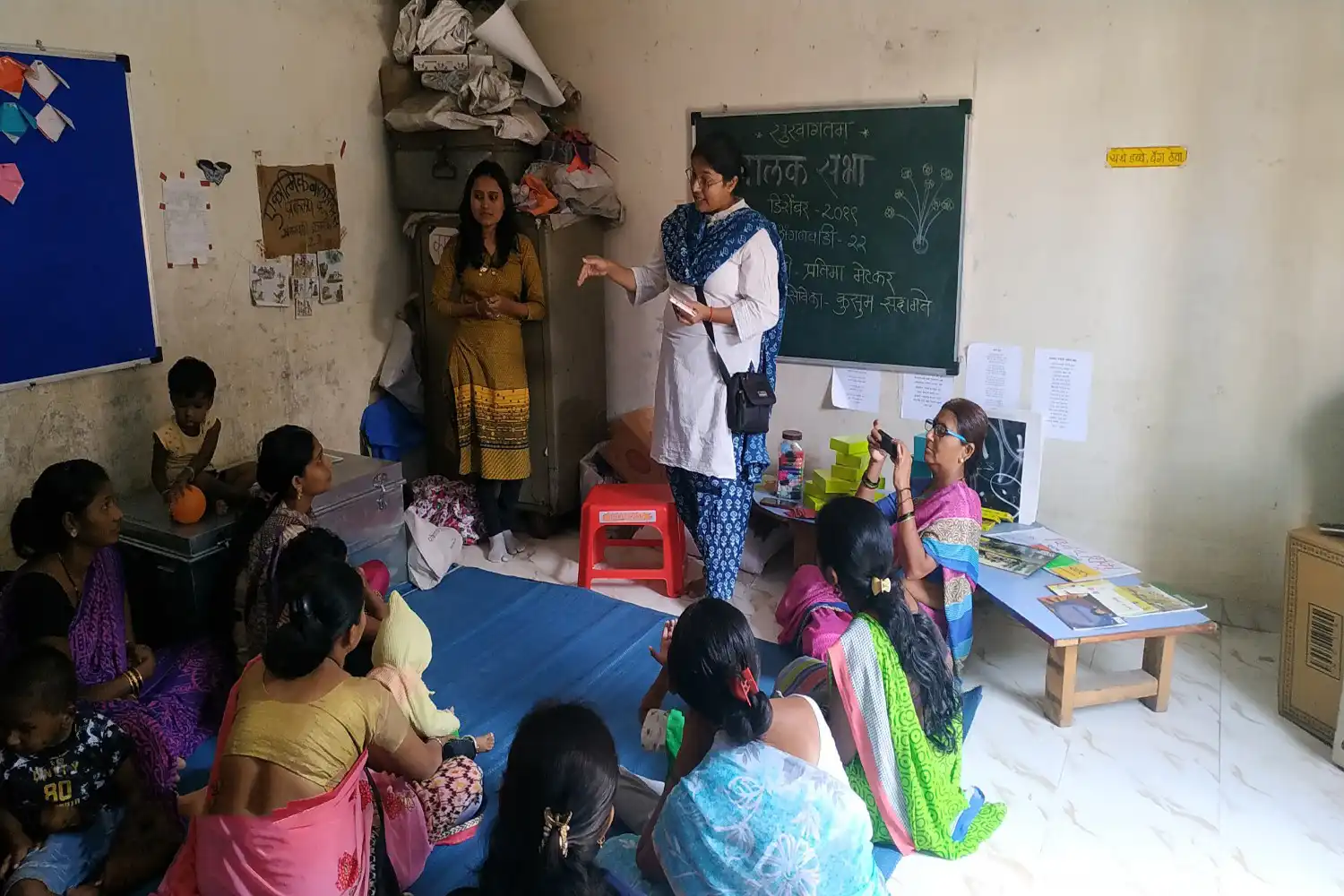
SR: This may involve many steps. One, you need to be invested in the community of parents who send their children to your school. This relationship of mutual trust and support, especially during times of need such as now, is critical in bringing parents on board, in discussing the role of the adult in the learning journeys of their children. It is important for all parents, and especially parents from low-income backgrounds, that the advantages of alternative learning approaches be made visible. You could use opportunities like parent-teacher meetings, health camps, or ration distribution drives as opportunities for contact, for parents to be introduced to their children’s learning process, speak with them, listen to their concerns, and express their thoughts on the learning process. It has to be a dialogue, involving listening and sharing.
It is often assumed, understandably, that unconventional education comes at the cost of good grades and eventually compromises chances at employability. The parent must feel assured that this education will only enhance their abilities.
In any case, there are no simple solutions to these issues. Greater awareness and acceptance, from government education systems and private schools alike, can perhaps hasten acceptance from parents, and therefore, from society.
“I have seen that many adults, perhaps most, haven’t had positive experiences of learning.”
TS: How does the experience of learning transform parents as teachers?
SR: Learning transforms everybody! How can we, as educators, involve parents in a transformative learning experience? I don’t know. This is a question we need to address to society. In the meantime, what we can do is delink daily learning from exams that come many years later. In my experience as a parent-educator and schoolteacher, the skills for children appearing in a performative exercise, such as a board exam, can be learnt separately, closer to the exam. The core skills of reading, writing, and comprehension need to be supported in learning situations. Teachers can do that in school while covering content, and parents can support skills at home. They don’t have to take responsibility for content.
TS: A recent informal survey revealed learning losses in children during the last two years of the pandemic.
SR: It is very likely that this involved losing skills. A child who has strong skills in reading, writing, comprehension, and math can pick them up easily, even when there are gaps. But since the focus is usually on content memorization, many opportunities are lost in keeping skills alive. Parents can be involved with this in a big way at home. Interesting worksheets with graded complexity can be provided to parents that allow them to ask the ‘why’ questions in addition to ‘how’ and ‘what.’ We may have to reimagine worksheets and activities to make this simple and easy for parents to participate in this process.
Once they are convinced that supporting a child’s learning at home is not onerous and may not involve a large investment of time, it will be potentially transformative. In addition, we need to keep revisiting the need for separating learning from board exams, and bring parents around to the understanding that monthly tests and yearly exams are not a stepping ladder to success in board exams. You can still keep a commitment to working towards a board exam in the tenth or twelfth grade without making it a nightmare for children, parents, and teachers alike.
TS: That leaves us with much to think about reimagining the role of the home and school environment in children’s learning journeys. Thank you for sharing your ideas and experiences. I am sure these would help many of us think deeply and go forward.
SR: Thank you for the opportunity to articulate many thoughts that I have had for a long time. I found it interesting as well.

No approved comments yet. Be the first to comment!