
What it means to be heard
This article discusses the experiences of the author in being exposed to the work of the Hoshangabad Science Teaching Programme (HSTP) as a young man. He describes how being heard with attention, and being included in decision making processes, made him stay back and continue with the work.
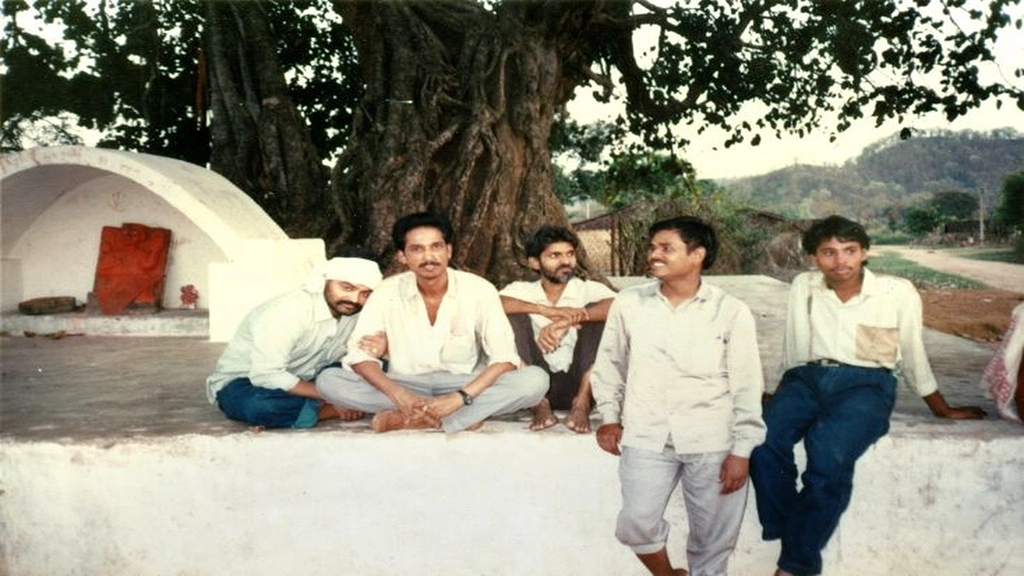
Photo credit: Eklavya
I had finished requirements for one degree and was waiting to begin the next. Thus, I had a bit of a spare time. I was told that there was a need for some work at a place called Hoshangabad where a science teaching program was being run in the schools with the help of faculty from University of Delhi. I decided to go to the Hoshangabad Science Teaching Program (HSTP), as two of my colleagues had been there for many months by then and were also likely to be there. Some of my own teachers also planned to follow me a little later.
This program had been initiated by Friends Rural Center (FRC), (a Quaker organization working on comprehensive development and upliftment of rural society) and Kishore Bharti (which had objectives related to working with rural people to help them build organizations for their holistic empowerment). The schools they worked with were State Government schools located in two regions. The program was being run in a ‘de jure’ partnership with the Education Department of the Government of Madhya Pradesh.
I reached Hoshangabad early in the morning. I was picked up by FRC. I now wonder how that was done so easily when there were no mobile phones. Contrary to what I thought of myself, the FRC expected me to be an expert in science. I was taken to a large hall where the science kit was stored. I was given a list of things that had to be prepared for the practical examination in two days.
Other people were expected to arrive the next day. One of my classmates who worked in the other organization (Kishore Bharti) was expected to arrive in the evening. So, I was alone with almirahs full of materials and the list of requirements. I had no instructions as to what to begin with and how I must work. As a student, I had been fortunate to have regular practical practice in all the three science labs of the school and then, at college. However, this was a different ball game.
Washing so much glassware at one go appeared formidable. Even then, I began with the work. Then, one of my classmates, Sadhna, who had already spent some months at Kishore Bharti, arrived. And then, we started. The tasks were not complex. But some of it involved work we had never done before. For example, we had to make acid and base solutions of specific concentrations so that the class VIII students could do titrations as a part of their assessment.
For those who may have forgotten, titration means neutralization of an acid by a base or vice versa. We take a measured amount of an acid/base in a test tube and add some indicator to it. The indicators must change colours when the solutions change either from being acidic to basic or to neutral, and for some other indicator, it is the reverse of it.
So, we had to make the solutions of the required concentration. It was the first time we had prepared such solutions with specific concentrations. This was one of the five experiments children had to do as a part of their board exams for class VIII.
We both worked from morning to late evenings with breaks for two days preparing sets for the schools where the exams were to be held. It was a big moment for both of us. As the work progressed, I slowly learnt that it was a part of the first District Board exam for the program. Going to the school was a surprise. The idea of practical exams in class VIII, (which we as students did not have) gave the unconscious expectation of a certain kind of lab and other facilities. The fact that the experiments would be done by students sitting on their mats was unsettling for a few moments.
The work’s momentum took that out of the mind quickly. We had to plan for the placement of the material and organizing the rotation after each 20 minutes for another experiment. We had to be ready for replenishments for the set of students moving into the place to do the experiment after doing the previous one. It was a flurry of activities, and we had to plan all this. I felt my role as a decision-maker and doer keenly.
There were 16 schools where this took place simultaneously. These schools were distributed in two areas—one around Rasulia and the other around Kishore Bharti, some 80 kilometers away. It was an intricate exercise.
And then, there was the task of assessment of the papers. It was a practical exam. We did not have time to either observe or assess the way the students did the experiments. We also did not have the time to conduct conversations with them to assess their understanding of the work. We had to assess them based on the observations they wrote or drew and the work, e.g., opened out flower, chromatograph or other such evidence for at least one of the experiments. All this material was carefully collected. And we drove back to the campus. The other teams from around Rasulia also returned with their load.
Then started the debate about the logistics of assessment. Should it be at Rasulia for all, or at Kishore Bharti? Or should the respective responses be assessed where they were collected? It was an intense debate. I was a major contributor and was listened to with care and respect. It’s not what was decided that mattered. What mattered was the feeling of participation in the process and of being listened to carefully even though I was new.
This got me engaged. It helped me develop a sense of ownership and partnership with the program. I felt a part of the process and of the team with responsibility. This relationship and engagement continued with me later becoming a part of all the processes including the setting up of Eklavya Foundation at Bhopal (www.eklavya.in/) to carry the work forward.
I have felt that if as a volunteer you come into an organization and get work that involves taking responsibility, that you can see that it is useful, requires some of your abilities, and stretches your previous experience, then you feel attracted to the place like a magnet. And then, if there are repeated personal requests that make you feel important and useful, you feel happy to have contributed and get attached.
Times change. What young people are looking for now may have changed. However, at the base there still remains this element of ‘Am I useful? Am I necessary and important?.’ Being respected and involved, and being given space to learn, grow and contribute to decisions, slowly transforms the attraction to stay into a commitment. That commitment is to the whole atmosphere and the culture and the little roles that are carved out from the roles that are needed. And in this, the small gestures of the people in the organization while interacting with you make a big difference to the relationships you build.
Note: To learn more about HSTP, please visit, https://www.eklavya.in/past-work-top/programmes-past-top/hstp
Related Articles
By | October 30, 2025

No approved comments yet. Be the first to comment!