
Appreciative Inquiry: some reflections from practice
Appreciative Inquiry (AI) is a strengths-based approach to organizational development that fosters change through positive, generative conversations. Using the Discovery, Dream, Design and Delivery framework, AI helps individuals and teams identify what works, build on existing strengths, and create thriving, purpose-driven cultures rooted in confidence, collaboration, and possibility.
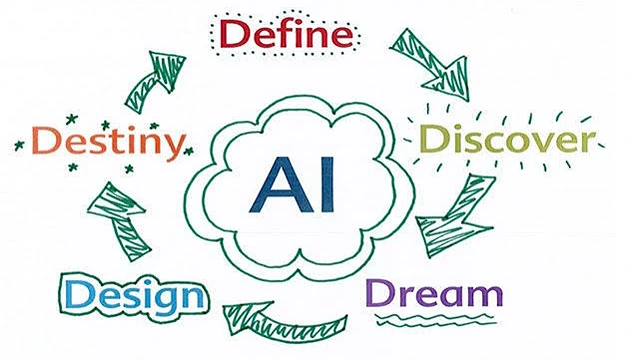
Appreciative Inquiry (AI) is a revolutionary organizational development framework that focuses on strengths rather than problems. Unlike traditional problem-solving methods that believe that diagnosing gaps/weaknesses is necessary for change to occur, AI investigates what gives life to a human system when it functions at its best. By asking positive, generative questions, this collaborative approach engages stakeholders in uncovering shared core values, processes, and successes.
Using a 4-D model, AI takes the group from the ‘Discovery Phase’ (current realities) to the ‘Dream Phase’ (envisioned future), which is followed by a Design Phase (using past success templates), and ending with the Delivery Phase (Execution).
Ultimately, AI shifts the cultural narrative from fixing deficits to amplifying potential, proving that the questions we ask determine the future we create together.
AI in action
“The workshop was magical and surreal”!
This feedback coming from the head of a not-for-profit, is truly something that has stayed with me as to how AI can make such a deep impact.
I had just concluded a 2-day workshop (Nov 2021) for the organization’s leadership team. This was their first experience of Appreciative Inquiry and the beginning of their journey into understanding their individual strengths as well as the team’s strengths.
As the first day flowed into the second, participants slowly immersed themselves into the notion of consolidating and heightening their strengths rather than attempting to fix their weaknesses. As they conversed with each other exploring how their strengths played out and listened to how the others experienced different strengths, their confidence grew quietly and steadily. When they recognized that their strengths were unique (in the way they combined), they began to embrace their strengths in a way they hadn’t done before.
One participant found her voice only on the second day. Recently, in a meeting she responded to a question and after a few sentences she said, “Oh, I could go on for a while but will stop for now!” Truly a transformation, from someone who didn’t believe she had anything to say, to believing she had plenty to say!
OD learners – ease of learning
Now let me shift the stage to an online workshop of 5.5 hours—the objective being to give participants a glimpse of Appreciative Inquiry. The learners were a group of about 15. They were going through a certification program in Organization Development (OD) spread over 18 months.
Within an hour-and-a-half at the end of the very first activity one participant said, “We experienced empathy, curiosity, compassion, encouragement, and a sense of non-judgementalness from our partners (whom they engaged in an appreciative interview)”
Most readers would be skeptical of such a state being possible in such a short span of time. But this is the reality of AI and a very popular phrase, “Believe it and you will see it,” tells us the story. In our daily lives, it is simply that our reality is a function of what we focus our energies on. If we choose to see what is working (for example, pedestrians walking on the pavement or all vehicles waiting behind the line at the signal, etc.), then we can inquire and draw lessons from the ‘positive’. This brings us energy. On the contrary, complaining about all that is wrong about the traffic and people, neither solves the problem nor is it energizing. This only leaves behind frustration.
From the philosophy to the practice to the methodology, AI works with the simple focus on inquiry into “what works”— no matter how rotten or demoralizing the situation be.
Similarly, the work on (individual) strengths has also led to calibration of the ‘best’ and then to inquire into how these individuals (high performing) used their strengths to deliver excellence.
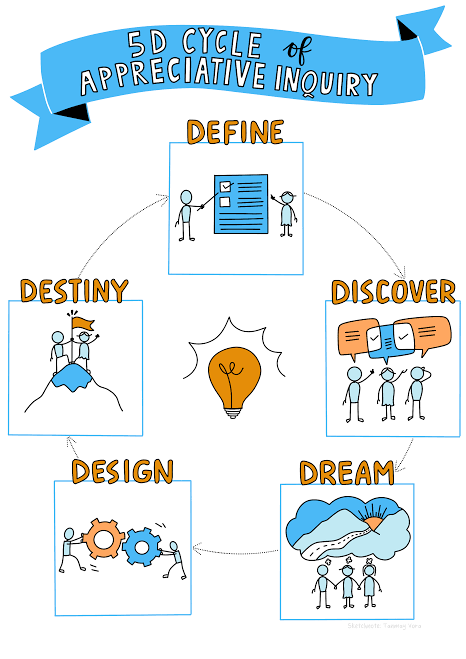
“We change the world one conversation at a time” – (David Cooperrider)
AI has methods that bring about such momentum. AI believes in simplicity in its methods. No activity or conversation requires any special training or ecosystem to make it succeed. Conversations are at the heart of all change and when infused with inquiry into ‘what works’, the human being is instantly launched into a generative process that they can then willingly, and without hesitation, enter.
In the same not-for-profit that I mentioned earlier, having tasted the value of engaging in a strengths-based intervention, the organizational leaders decided that they would bring this element into performance appraisal conversations too. When performance conversations use strengths as a basis, then the change in tone is distinct. The question “Why were you unable to…” turns to “What strengths could you have used…”. While both questions are examining performance, the very nature of such a question brings about a very different outcome. This is because now the individual is working at it from a developmental lens rather than feeling evaluated and judged.
Implications for OD practitioners
Organizational leaders and managers constantly complain about the various problems they face and, in reality, they do. However, this incessant focus on ‘what is not working’ when replaced with the appreciative view simply changes the climate in the room to being one where there is greater confidence that solutions are possible. This focus on the negative also results in the belief that creating and sustaining a positive work environment is a myth or a fantasy. Alongside, they also wonder how other organizations are able to create such vibrant environments.
In conclusion
In a world that is ravaged by war and unlimited suffering, human beings crave for a happy life. What many fail to reflect on is that if some other human being is happy, then there is perhaps some formula or method or process that they might be following. Bringing an appreciative view into our lives helps us make this transition with relative ease.
For organizations, practicing AI enables them to create the cultural conditions necessary to reframe problems as opportunities for strength-based growth and development. By simply asking the question, “what is working well”, organizations can begin to design themselves more purposefully, enabling them to not just grow but thrive.



No approved comments yet. Be the first to comment!