
Home-based learning: challenges and opportunities
Ria Banerjee and Riti Mukherjee, in their article, discuss the need to be aware of the problems in putting the onus of children's education entirely on the parents.
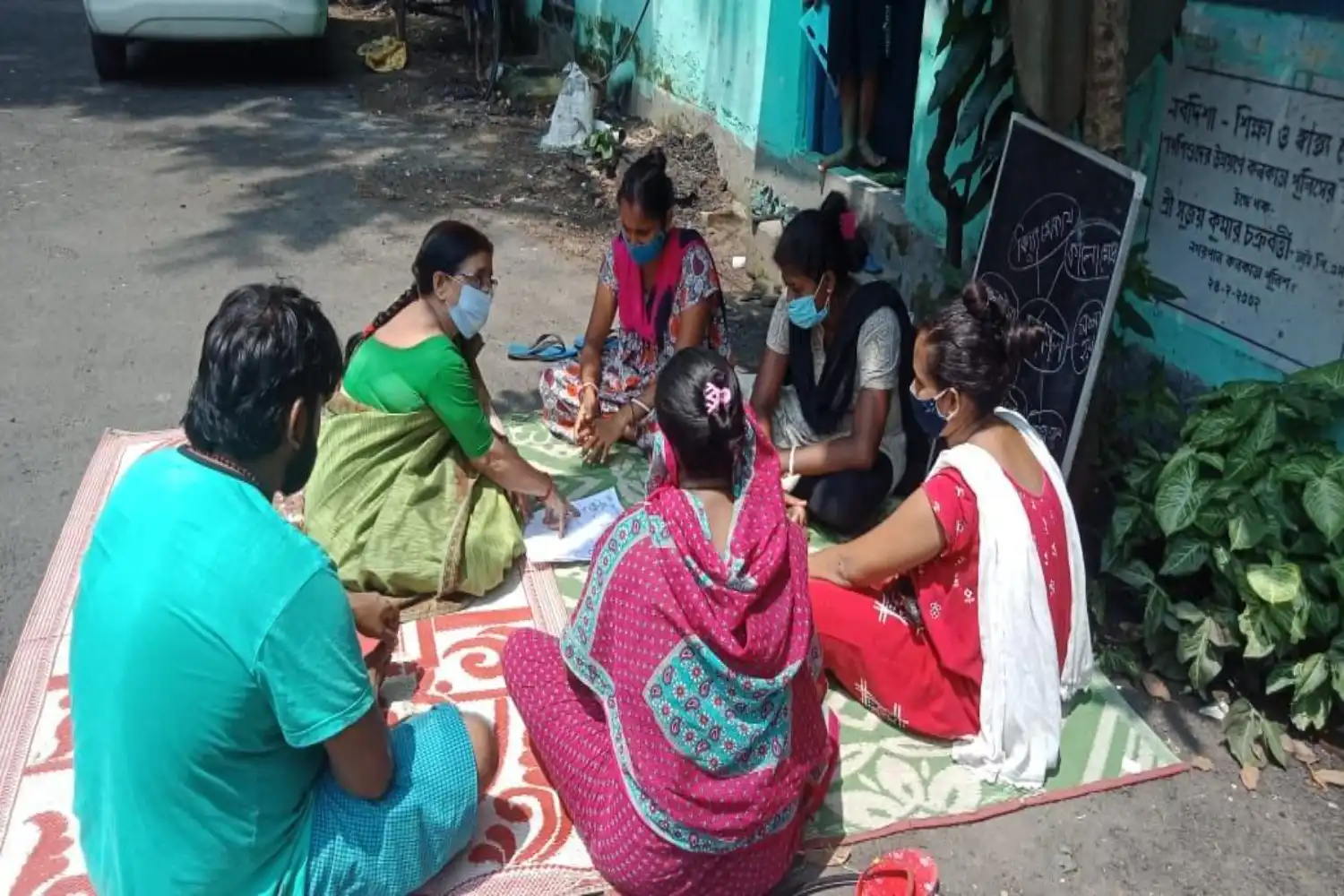
Seventeen months, almost two academic years slipping by, and here we are, still in the middle of a pandemic, juggling ideas to connect with children. We faced the undesirable, but inevitable, consequences of prolonged school closure, e.g., children being promoted to the next class without attending a single day of school. As we slowly settled into the new normal, innovating and experimenting at every stage, we constantly kept asking ourselves questions about what worked and did not, the role of technology, the validity of expectations around children acquiring new learning and skills at home, and in situations where they are not likely to get much guidance.
We also wondered whether the objective of home-based learning was to be kept confined to maintaining pre-existing learning levels or to attempt to teach new concepts and skills. For children without digital access, worksheets were the only means. How far can worksheets play the role of a ‘teacher’? This article aims to reflect on these questions from Vikramshila’s various engagements with children in different settings, within the age group of 3–10 years.
In June 2021, the Union Ministry of Education released ‘Guidelines for parent participation in home-based learning during school closure and beyond.’ These guidelines emphasized the need for parents to create a safe, engaging, and positive learning environment for children and to have realistic expectations for them. It places parents in a pivotal role to support their children’s well-being, and to ensure continuity of learning—“Home is the first school, and parents are the first teachers.”
As good as it may sound, we realized that there are several pitfalls to it. How far can we burden parents in these times of extreme stress, vulnerability, uncertainty, and loss of income and livelihood? Access to or lack of a digital device was undoubtedly a major issue. But there are other factors influencing parental involvement as well.
We developed home-learning packages in four different states—West Bengal, Assam, Uttar Pradesh, and Maharashtra—for 3–6 years old children. These consisted of an illustrated calendar and audio and video resources to support parents in facilitating activities with the minimal resources available at home. This learning package is being disseminated through ICDS officials and frontline workers.
These have also been uploaded to the departmental website, from where anyone can have free access. Parents receive a package on a weekly or fortnightly basis through the Anganwadi workers, who have created WhatsApp groups with parents who come to their centers to pick up their packages. In the absence of smartphones or internet for parents, relatives, or neighbors are sent with the packages to share with the parents.
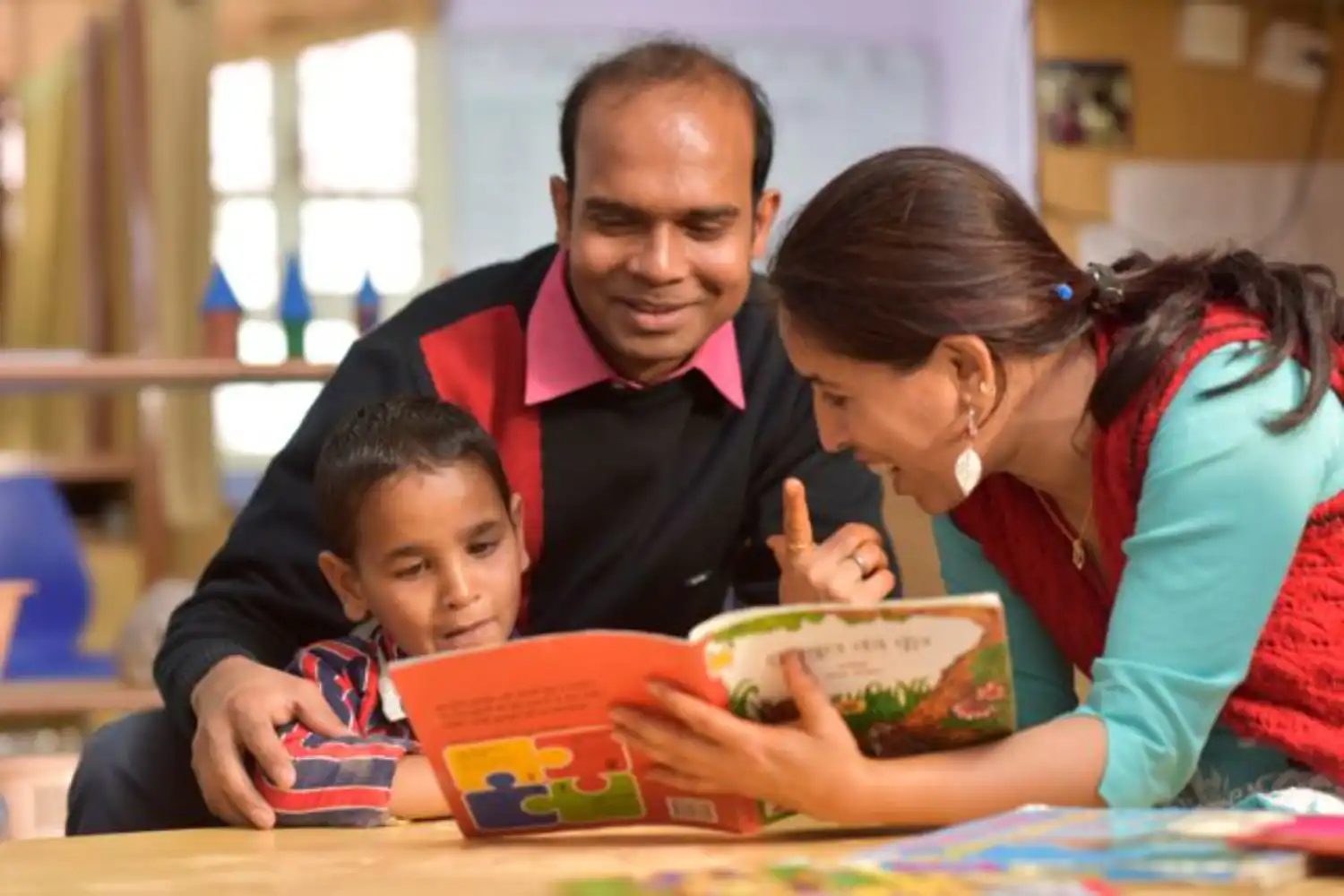
Parents need to be supported adequately to be able to play the role of a ‘teacher’ in the formal sense.
A dipstick study conducted by us in Maharashtra showed that, on average, even the most enthusiastic parents could spend only about half an hour to one hour daily to support their children’s learning, due to a lack of time. These were fairly simple learning activities meant for preschoolers (3–6 age group), that could be conducted using materials available at home and needed no additional expenses. In spite of that, parents needed support, demonstrations, and counseling to feel confident to take on the role of a ‘teacher’ at home!
For children in primary classes, we took a different approach—we sent them stories and encouraged them to draw pictures. We gave them ideas on simple craft activities, yoga, gardening, and some worksheets to work on, mostly focusing on basic skills and concepts. Getting parents involved in the process was the next step. For this, we first decided to hear them out so as to unburden them of their expectations, difficulties, and challenges.
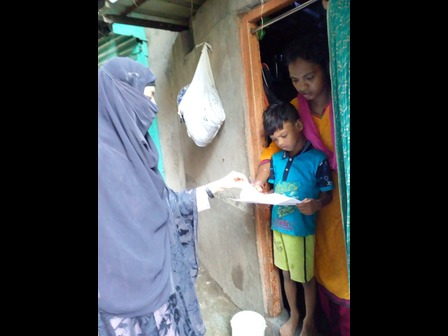
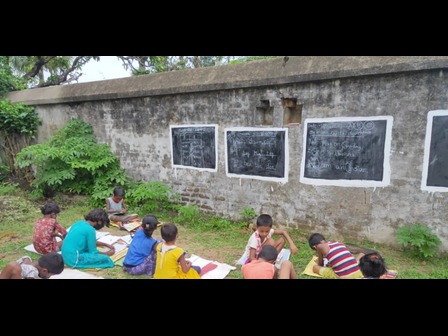
Gradually, we gave them simple responsibilities—to talk to their children about their feelings, to encourage them in whatever they were doing, to make sure that children were sending back their homework on time, and if possible, to share pictures on WhatsApp. To bridge the digital divide, we started setting up makeshift centers in whatever space was offered to us by the community—rooftops, balconies, porches, empty shop fronts, public parks, verandas, and clubs in cramped urban settings, and courtyards and open spaces in rural settings, where community blackboards were painted to provide access to more children.
We were busy working on a ‘readiness and recovery’ package, anticipating school reopening when the second wave struck, and we realized that this was going to be long-term and recurrent.
The readiness and recovery package was appropriate in a school setting, where the teacher was there to provide the required guidance and support. It would not work as well in homes with low levels of literacy and very little resources to support or stimulate children to learn the basics of literacy and numeracy.
In the worksheets that we designed, we decided to keep things simple, giving pictorial cues, lots of repetition, and scope for practice, and focused on just a few key learning outcomes to keep children engaged and connected. Attempting any kind of ‘grade level competency’ was out of the question.
We got the worksheets field-tested in low-literacy settings and were reassured by the positive response. Our target was to get both parents and children interested in the learning tasks, with an underlying assumption that this would, perhaps, help parents raise their threshold levels along with their children.
Since home-based learning is now a national focus, we need to be extra careful not to pass on the onus or burden of learning on to parents. Parents need to be supported adequately to be able to play the role of a ‘teacher’ in the formal sense.
Teachers should form support groups of parents to provide guidance at every step, to address their sense of inadequacy and low self-confidence. Any home-learning program has to keep this broader perspective in mind.

Related Articles
By | April 29, 2026
No approved comments yet. Be the first to comment!