
Writing for children in India: the shifting landscape
This article provides a historical overview of the evolution of children's literature in India, with a focus on the period after independence. It discusses contemporary trends in genres, and questions related to quality and authenticity.
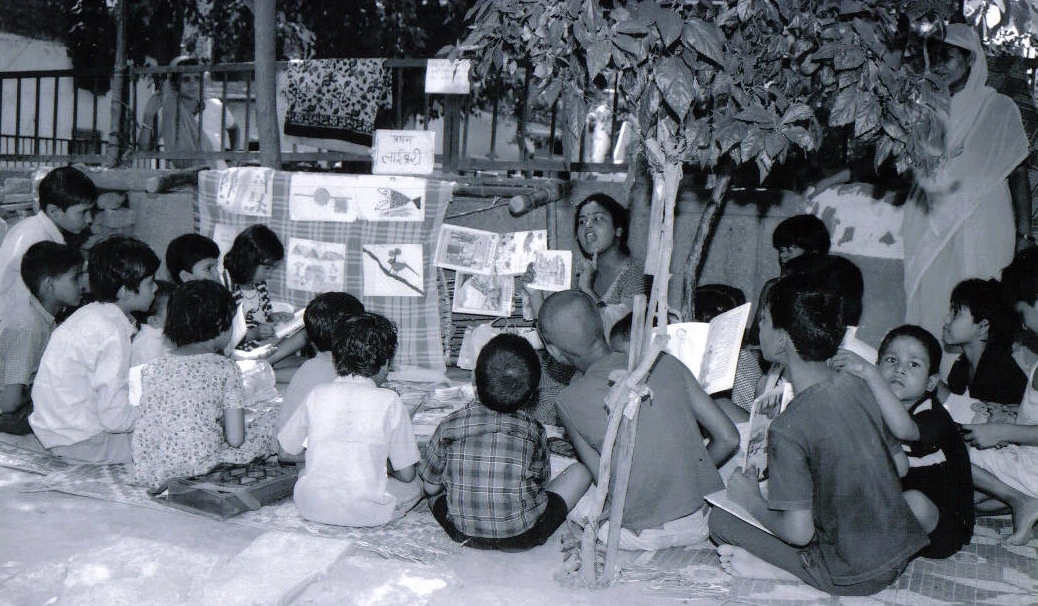
Photo credit: Wikimedia Commons/Pratham Books
Many people believe that the boom in children’s literature in India is a recent one. However, its roots are much deeper and more complex than is commonly acknowledged. It is true that written literature for children in India has a shorter history than what prevails in many other parts of the world. However, its roots are embedded in oral and performative traditions that stretch back nearly 5,000 years.
The Indian subcontinent has been a repository of stories for centuries. The Kathasaritsagara, the Panchatantra, the Jataka tales are cases in point. We must also consider epics such as the Ramayana and the Mahabharata, and stories featuring iconic characters such as Mullah Nasruddin, Sheikh Chilli, Birbal and Tenali Rama.
Storytellers did not distinguish between adults and children. Their stories were for everyone. Only a few specialized genres (such as lullabies and riddles) or collections (such as the Panchatantra) existed purely for the consumption of children. At the same time, the practice of telling children stories, particularly at mealtimes, was widespread. Cultural lore, mythology and folk-narratives were carried across regions and generations through performative traditions, such as, song, art, dance and theatrical forms.
Children’s literature in the colonial period
Colonialism strongly impacted children’s literature in India, establishing it as a written form produced especially for the consumption of children. During the nineteenth century, School Book Societies (established by the British Raj in different presidencies) published a large body of moral and mythological tales, and books on science, geography, and so on, in numerous Indian languages as well as in English. Children’s versions of the Bible were translated into multiple languages as a part of missionary efforts in different parts of the country.
Children’s magazines also appeared in several Indian languages (e.g., Balak, Khilauna and Kanya Manoranjan in Hindi; Sandesh, Sakha, Balak Bandhu in Bengali, and so on). These periodicals were a rich source of information regarding science, health, hygiene, and so on; as well as pleasure-reading for children.
Banerjee (2007) reports that when the National Library of India (the erstwhile Imperial Library, under the British Raj) compiled a bibliography of children’s literature in Bengali, it listed over 5,000 books and 133 periodicals published during 1818-1962! The different genres of children’s literature in colonial times included stories, advice, descriptions, scientific information, moral essays, biographies, poems, riddles, prayers and more.
Similar bodies of literature started emerging in various other Indian languages as well (see, Chandra, 2007; Nijhawan, 2004). These were disseminated by similar means. These used magazines and texts created by School Book Societies as ways to educate and entertain youth. Banerjee notes that the sheer number of publications produced for children clearly reveals that they were a key means of educating children during this period.
Of course, these publications presumed children who could read, had access to books, and had the leisure to read. Literacy levels were very low during colonialism. The literacy rate stood approximately at 6% at the beginning of the 20th century and 18% at Independence. Therefore, we can be fairly certain that the reading population was a limited, and a fairly privileged subset of the total population, and a predominantly urban one.
Therefore, the literature intended for children’s use was intended for the use of this small subset. It did not reflect (for the most part) the multiple worlds of childhoods and children. Banerjee notes in her analysis of Bengali literature that texts produced for children during this period were largely created by the ‘respectable middle classes’. These envisioned the aspirations of this class to reform society by producing a certain kind of child – a future citizen subject, if male, and a good mother and housewife, if female.
This can be contrasted to older, oral traditions where literature was not designed to be consumed only by children. Hence, there was less gatekeeping and adult control. Children could access and enjoy a wider selection of material. In fact, like all mythological stories and folktales, most of the oral folklore of the subcontinent included vivid allusions to violence, sexuality and so on. These are often deemed as inappropriate for the consumption of children in written canons.
Children’s literature in the aftermath of independence
After Independence, nation-building emerged as an important theme. Magazines like Chandamama (established in 1947 in Telugu and Tamil), as well as publishing houses such as the National Book Trust (NBT) and the Children’s Book Trust (CBT) (both established in 1957) started producing literature for the children of a newly independent India. Chandamama eventually started publishing in English and 12 other Indian languages. It largely continued to produce retellings of mythological and folk tales.
On the other hand, NBT and CBT introduced readers to more contemporary stories that reflected an Indian ethos and culture. Noteworthy authors and illustrators like Pulak Biswas, Badri Narayan and Shankar created titles of enduring appeal to children during this period. Adaptations and translations of English literature, as well as translations of Russian and Chinese literature appeared in different Indian languages.
Meena Khorana’s (1991) The Indian subcontinent in literature for children and young adults lists more than 900 annotated entries of literature produced for children in the English language, post-Independence, up until the late 1980s. These entries attest to the existence of a variety of genres, such as traditional literature (mythological stories and folktales), fiction (historical, realistic and fantasy), poetry, drama, biography and autobiography, and information books.
Despite the number and variety of books available during this period, most Indian publications, with a few exceptions were low-cost productions. This was largely achieved by keeping illustrations to a minimum and not investing in design. The costing was designed to ensure that these books could reach as many children as possible.
Contemporary trends in genres
After liberalization in the early 1990s and the opening up of the economy, a market was discovered for selling books to urban, middle-class children, and their well-educated, informed parents and schools. Small, independent publishing houses began to appear in the early 1990s and continue to proliferate. These publishers began producing a small but determined stream of innovative books paying attention to illustrations, production and design, and creative means of distribution. The past three decades have seen a significant expansion in three genres, in particular – picture books, young adult novels and literary non-fiction.
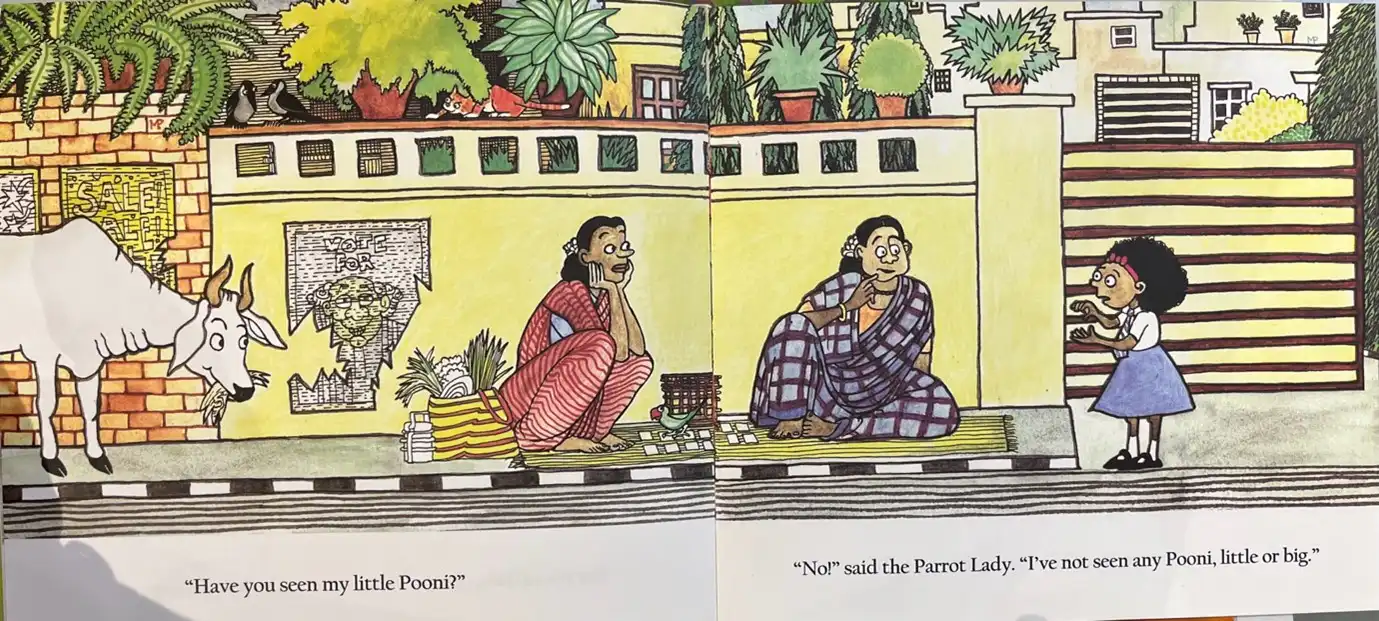
Illustrated books for children have been around since the colonial era. The Indian market was flooded during the 1960s and 1970s with beautifully and richly illustrated Russian and Chinese literature for children. But the ‘picture book’ is somewhat distinct from these genres. It is a relatively recent literary entrant into the Indian market. So, how is the picture book different from illustrated books?
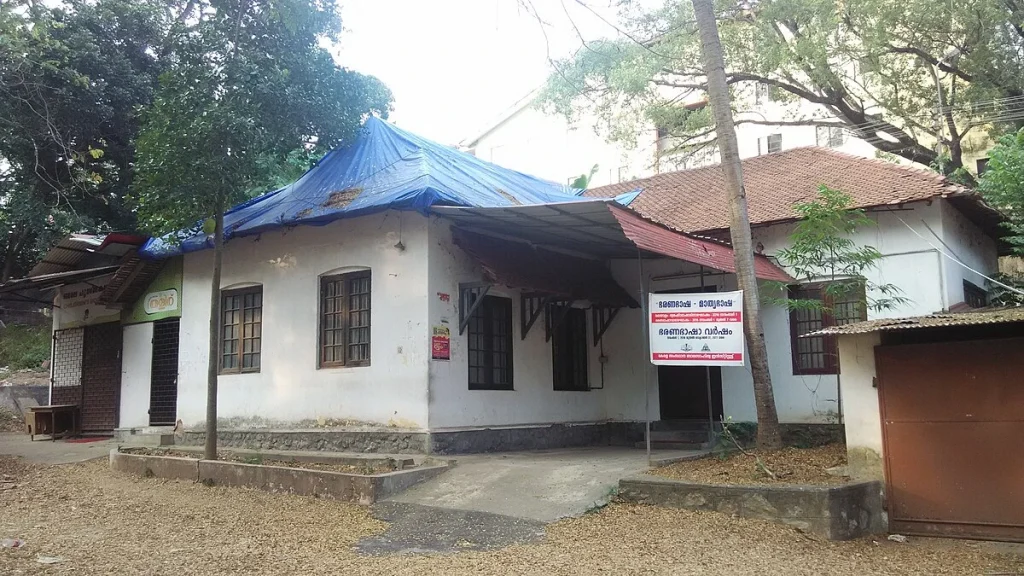
Photo credit: Wikimedia Commons/Navneet Krishnan S.
Lawrence Sipe (2010) describes it as “…the words and pictures, equally important, stand in complex relationships with each other, and …the pictures do not merely ‘illustrate’ what’s already said in the verbal text, but add something different and new, so that the synergy between words and pictures adds up to something greater than the sum of its parts” (Sipe, 2010, p. 238).
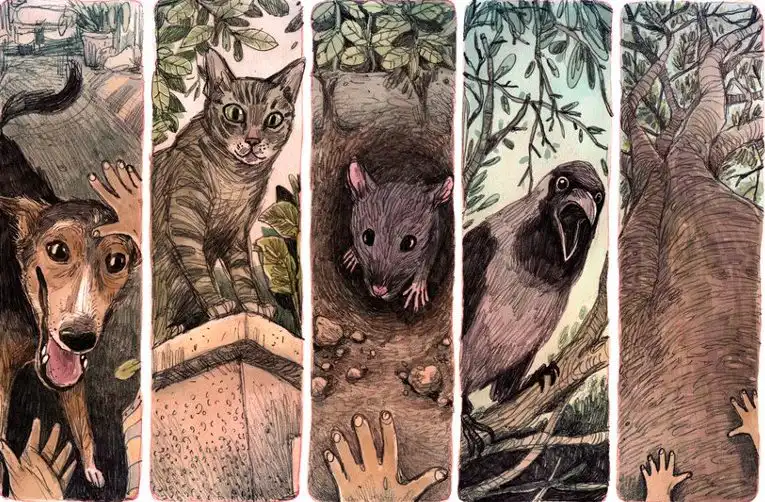
In other words, the words rely on the pictures to complete the story, and the pictures rely on the words to provide a continuous narrative. Independent publishing houses in India have invested a great deal of energy, attention and resources in producing beautiful picture books over the last few decades.
Literature for young adults is another category that has expanded in recent years. The teenage years were traditionally a period of rapid transition into adulthood from childhood. But, with modern societies prolonging education, delaying marriage and entry into job markets, a new developmental phase has been created of prolonged adolescence, especially amongst the middle classes. The needs of this new developmental phase, and its buying power, are catered to by the Young Adult (YA) genre. The ‘problem novel’ typifies this genre, which deals with topics that are uncomfortable, yet are seen as relevant or necessary for young adults to grapple with.
A third area of qualitative change has been in the production of literary non-fiction. Illustrated encyclopedias, biographies and non-fiction series books (like the How and Why Wonder Book series) have been in the Indian market for a long time. However, the non-fiction being currently published has a self-consciousness about qualifying as high-quality literature. As Kiefer and Wilson note in their discussion of literary non-fiction in the West: “Good nonfiction, like fiction, is an art form, designed to give pleasure, and enlightenment, to arouse wonder, and to reveal our capacity for self-awareness and understanding” (Kiefer & Wilson, 2010, p. 291). Writers and publishers of non-fiction have pushed the envelope in recent years in terms of creating a new body of ‘creative’ or literary non-fiction in India.
The genres of poetry and drama, by comparison, are lagging behind other genres in terms of development and output. Perhaps this is reflective of the overall market. Even for adults, poetry and drama are consumed less in their written forms as compared with fiction and non-fiction books.
Quality, authenticity and the imagined reader
In recent times, most progressive publishers have shown an amazing sensitivity to creating literature that represents diverse realities. Today, you will find books on every subject, theme and social issue, and representing diverse social groups. While we can rightfully celebrate this as an accomplishment, there are multiple cautions to keep in mind.
First, much of children’s literature published in India today presumes the middle-class, urban child as its reader. Including different realities in books is often a way to introduce middle-class children to the varied experiences of ‘other’ children in their country. Alternatively, this is an attempt to sensitize them to issues related to inequity, injustice, indigenous art forms, and so on.
Rarely do children’s books directly address the marginalized reader. Books that directly address children from marginalized sections of society are relatively rare. Here, we remember the instance of a child from the fishing community, who, upon being given a Tamil edition of My Friend, the Sea, commented that finally, after always only him reading about other children, ‘they’ would now read about children like himself!
Second, should authors write books because children ‘need’ them, or should books be written because authors feel the need to write a particular book? Can high quality books be written ‘to order’? Is creating literature akin to content creation, or is it an artistic endeavour?
We cannot of course categorically establish that writing to issues has led to inferior quality children’s books in the Indian context. However, we would like to caution readers that this is a double-edged sword. On the one hand, it can serve to sensitize child readers about important issues. And on the other, it could lead to the creation of superficially and inauthentically written books.
CS Lewis, the author of the famed Narnia series, takes the stance that “…the only one (way of writing) I could ever use myself, consists in writing a children’s story because a children’s story is the best art-form for something you have to say” (Lewis, 1952, p.1.). How do we balance this strong stance on quality in literature that Lewis takes, with the need for more diverse and representative literature for a highly stratified and multicultural country?
Third, most of the adults producing books in English are from backgrounds of certain class privileges. How authentically can they represent the realities and concerns of the children from marginalized groups whose childhoods they are representing? Unlike the notable body of literature for adults which represent Dalit voices, experiences and aesthetic, the body of children’s literature produced by members belonging to disenfranchised groups is still marginal and small in numbers. Even the awareness that ‘babysitting’ for other groups and classes could be problematic, has not fully developed in writing for children in India (see Sharma & Batra, 2022 for a fuller discussion).
The ‘right to write’ is a full-fledged topic of discussion and debate in the West (see Wolf, Ballentine & Hill, 1999), where authors of colour question the right of white people to represent their realities. This is an important caution for publishers, authors and illustrators in India to keep in mind, as they hurry to represent myriad realities and publish multicultural literatures. Who are the creators of these books? Who are the presumed readers? How high is the overall literary quality of the book?
In conclusion, the history of children’s literature in India has come a long way over the last two centuries. It has drawn upon its oral traditions. However, it has also significantly evolved in terms of form, readership, genres, and styles, etc. At the same time, it is sobering to note that nearly 50 percent of all books published in India are either in English or Hindi (Neev Literature Festival, 2023). Despite the lack of sufficient information about publishing in regional languages, we would not be amiss in stating that overall, children’s publishing in regional languages has not kept pace with developments in English language children’s publishing in terms of experimenting with genres, illustrations and design.
Of course, there are exceptions. In Hindi, for example, publishing houses like Ektara have been bringing out contextually relevant and innovative books and magazines for children. Riyaaz is a hands-on academy for young illustrators that is working on improving the quality of illustrations in children’s books. But, by and large, regional languages have lacked the resources (and perhaps, the drive) to publish innovative books for children.
It is also important to note that nearly 71 per cent of all books printed are accounted for by schoolbooks. Only four (4) per cent of total print publications (for adults and children) is accounted for by books written for entertainment and enjoyment (referred to as ‘trade books’). Some 25 per cent of trade books published in India are for children and young adults. This means that trade books for children account for possibly only one (1) per cent of the total print publications.
Further, international publishing houses, like Penguin Random House, HarperCollins and Hachette, and mass market publishers like Scholastic, Dreamland and Om Books continue to dominate the market share. Another significant aspect to note is the absence of a thriving library movement, whether school-based or free public libraries, that can be designed to create equitable access and responsive participation for all.
This means that educators can rightfully celebrate the recent expansion of children’s book publishing and the variety of interesting and high-quality children’s books available these days. However, much work remains to be done in this sector.
References
Banerjee, S. M. (2007). “Children’s literature in nineteenth-century India: Some reflections and thoughts”. In R. Findlay & S. Salbayre (Eds.), Stories for Children, Histories of Childhood. Volume II: Literature (pp. 337–351). Presses Universitaires François-Rabelais. Retrieved: https://books.openedition.org/pufr/4974
Chandra, N. (2007). “The pedagogic imperative of travel writing in the Hindi world: Children’s periodicals (1920–1950)”, South Asia Journal of South Asian Studies, 30 (2), 293–325. Khorana, M. (1991). The Indian Subcontinent in Literature for Children and Young Adults: An Annotated Bibliography of English-Language Books. London: Bloomsbury.
Kiefer, B., & Wilson, M. I. (2010). “Nonfiction literature for children: old assumptions and new directions”. In S. Wolf, K. Coats, P. A. Enisco and C. Jenkins (Eds.), Handbook of Research on Children’s and Young Adult Literature (pp. 290-298). NY: Taylor & Francis.
Lewis, C. S. (1952/1975). “On three ways of writing for children”. In, C. S. Lewis, Of Other Worlds: Essays and Stories, First Harvest. Retrieved: https://www.catholicculture.org/culture/library/view.cfm?recnum=9117
Neev Literature Festival Report (2023). Children’s Literature in India: 2022. Neev Literature Festival: Bangalore.
Nijhawan, S. (2004). “Hindi Children’s journals and the nationalist discourse (1910–1930)”, Economic and Political Weekly 39 (33), 3723-3729.
Sharma, P. & Batra, K. (2022). “Rewriting the aesthetics of Dalit literature”. Literature and Aesthetics, 32(1), 11-24.
Sipe, L. R. (2010). “The art of the picturebook”. In S. Wolf, K. Coats, P. A. Enisco and C. Jenkins (Eds.) Handbook of Research on Children’s and Young Adult Literature (pp 238-251). NY: Taylor & Francis.
Wolf, S. A., Ballentine, D., & Hill, L. (1999). “The Right to write: Preservice teachers’ evolving understandings of authenticity and aesthetic heat in multicultural literature”. Research in the Teaching of English, 34 (1), 130-184.
Note: This essay has been excerpted from ‘Introduction: The Shifting Landscape’ in S. Menon and S. Rao (Eds.), (2024), Children’s Books: An Indian Story (pp. 7-30). Bhopal: Eklavya.
Related Articles

By | September 5, 2025
No approved comments yet. Be the first to comment!