
Uncovering the potential of nature learning at home
This piece discusses the importance of home-based nature learning, and how adults can facilitate such a process for children.
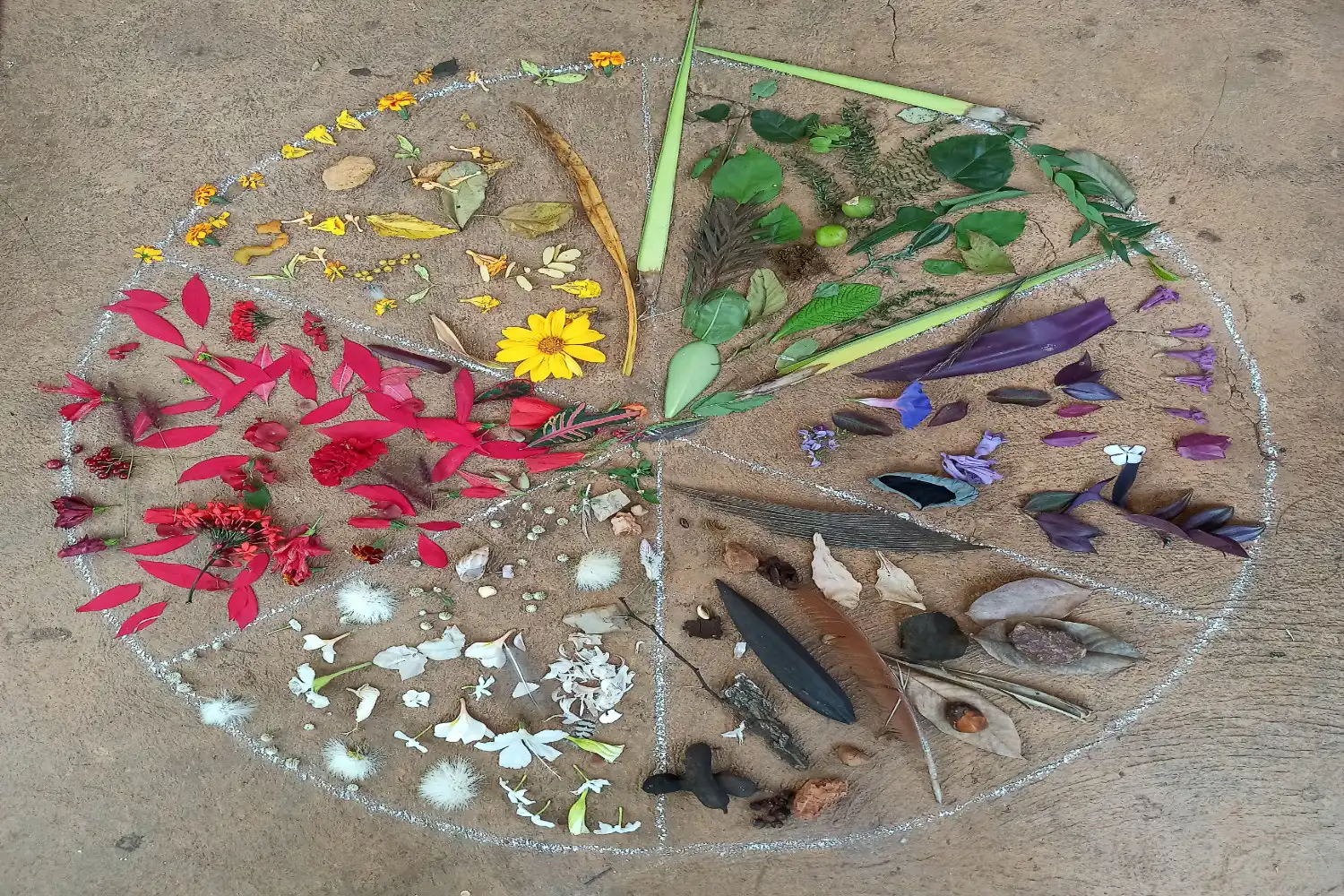
In the summer of 2020, when the pandemic was making its way through the world, like everyone else, our team at Nature Classrooms too, was deeply impacted. Like many working with school communities, we worried about how students, teachers, and parents would cope. We had apprehensions about how young children would make meaning of the uncertainty of everything that was unfolding. And finally, we also worried about how we would continue working.
Our work of connecting learning to the natural world across different schools and organizations involved meeting teachers, making lesson plans together, facilitating outdoor-based nature immersion workshops for teachers, and so much more that we could not imagine doing remotely or online.
We always knew and believed that one did not have to go far to connect with and experience the wonders of nature. The lockdown forced us to think about how children and adults could continue to engage with and take solace in the natural world, as they stayed safe at home.
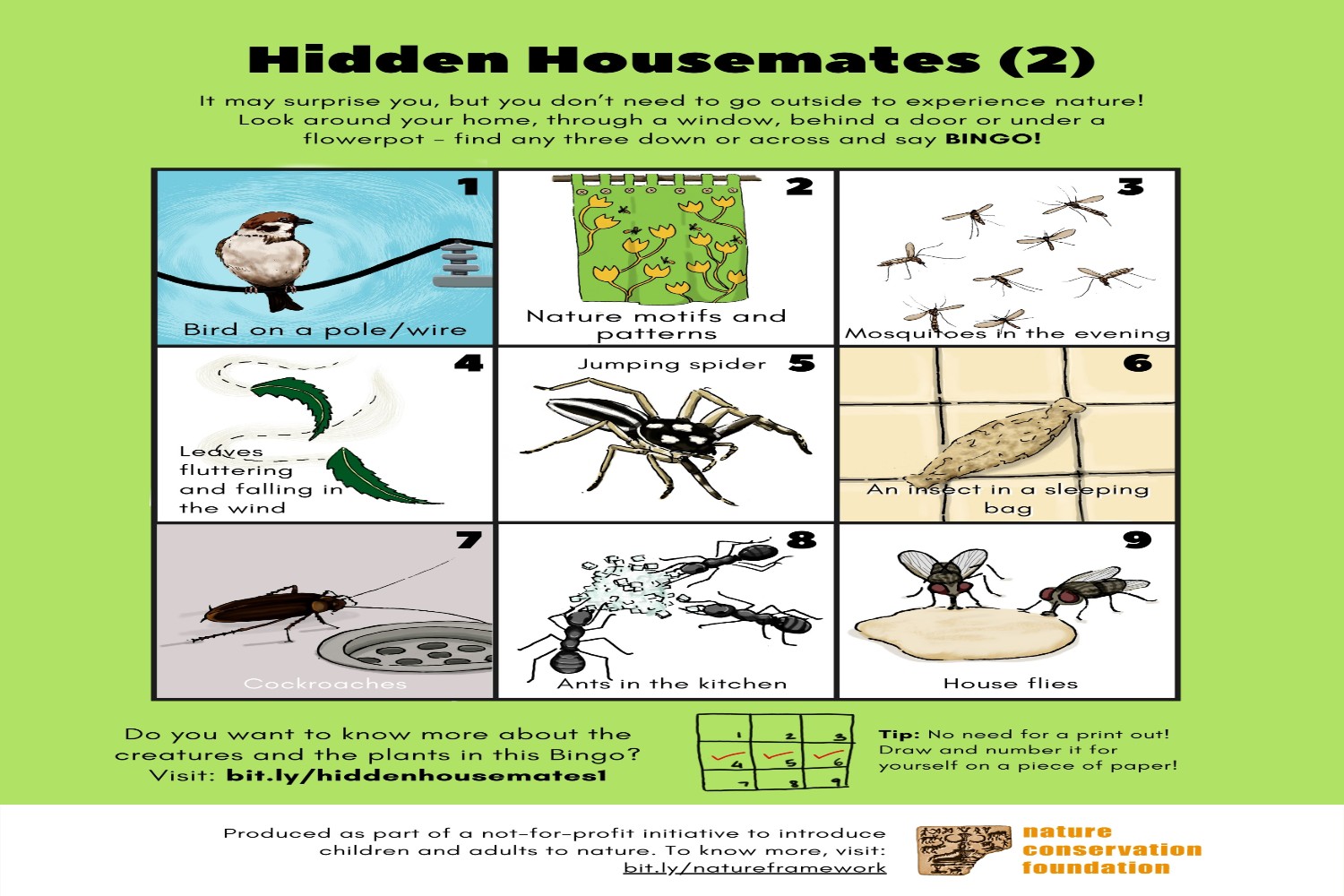
Out of this, was born a series of simple interventions, processes, activities, and games, one of them being an activity that we called—‘Hidden Housemates.’
Nature connections at home
Hidden Housemates Bingos are a series of activity sheets (available in English, Kannada, and Hindi) that encourage us to explore our surroundings and look for beings, images, sounds, smells, and textures of nature in and around our homes. The bingo sheets are a way to go on a ‘nature’ walk inside our own homes and spaces and discover surprises in different nooks and crannies.
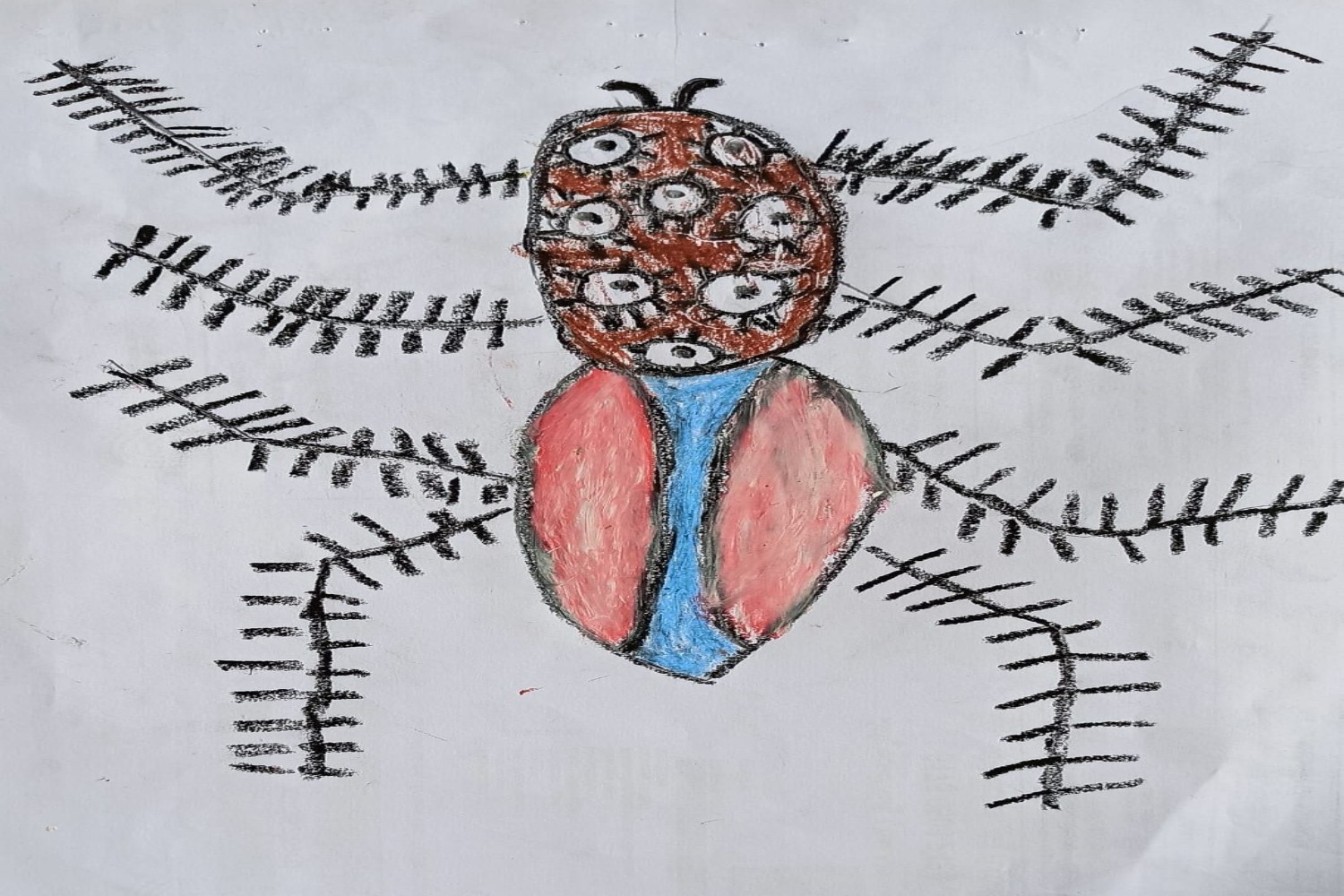
Teachers from the Fig Tree Learning Centre in Silvepura told us about a student who found a way to connect with spiders in their home, first through the bingo, and then by using the activity prompt to imagine themselves as spiders. “Imagine if you had 8 eyes, 8 legs like a spider. How would your life change? Make a drawing or make a story,” the prompt said.
We share with you one of the stories by a middle-school student (originally in Kannada):
If I were a spider…
“I am a spider; when I am outside, I build webs on a tree, and inside the house, I build webs in corners. I have 8 legs, and each leg has small hairs all over. The colors on my body are blue, pink, brown, and black. One lady moved me with a broom while cleaning, and I had to go outside and sit on a branch, a creeper. Sunlight fell on my body, and I felt happy. So, I stayed there. In the evening, when the clouds turned black, they made the noise ‘dum-dum.’ I felt very scared because when I was inside the house, I had not heard this noise.
“Suddenly, it started raining, and my body got wet, and I got a cold! I was shivering and went back to where I was inside the house, built a web, and slept comfortably.”
In the emerging context of restricted movement as a result of the pandemic and increasing time that students and grown-ups spend at home, it is crucial to explore different ways in which we can continue to explore and stay connected to our surroundings.
One way is to experience and see with fresh eyes the spaces and surroundings we have been occupying. It is amazing how much one can discover with each walk in and around one’s home, just like the student who wrote about spiders with such empathy. We share our homes with many creatures and plants, and noticing them with more focused attention can help us learn and grow in new ways.
Why ‘nature learning’?
We believe that learning about nature and spending time connecting with the natural world is as essential for young students (and adults) as early literacy or numeracy. There are numerous studies from the Global North that highlight the role of meaningful and deep bonds with our immediate natural world for our physical and emotional health and well-being.
At Nature Classrooms, we hope that as adults in teaching-learning spaces, we can foster love, empathy, and curiosity for the natural world in young children.
We do this through long-term engagement with primary school teachers and development of age-appropriate and contextual nature learning resources that can enrich existing environmental studies curricula.
For more than a year, young children have been home and away from schools, teachers, and their peers. As people and organizations interested in children’s learning and growth, we all carry a collective responsibility at this time of crisis.
This makes us wonder about the potential that nature learning holds.
What opportunities do the home and its immediate surroundings offer?
If we think of the home and the neighborhood as sites of primary learning for young children, fascinating opportunities present themselves.
Opening up the natural world to children allows for many learning possibilities—honing of language and new vocabulary as children learn to name (their own, unique, made-up names) the creatures they encounter, storytelling as they recall and express what they saw, heard, and felt, quantitative and spatial skills as they count, guess the height and the weight, and make comparisons, and the arts as they record and document their observations using drawings and through patterns.
But most importantly, spending time getting to know their surroundings is likely to help children feel connected and as belonging to someplace and contribute to their ‘ecological identities.’
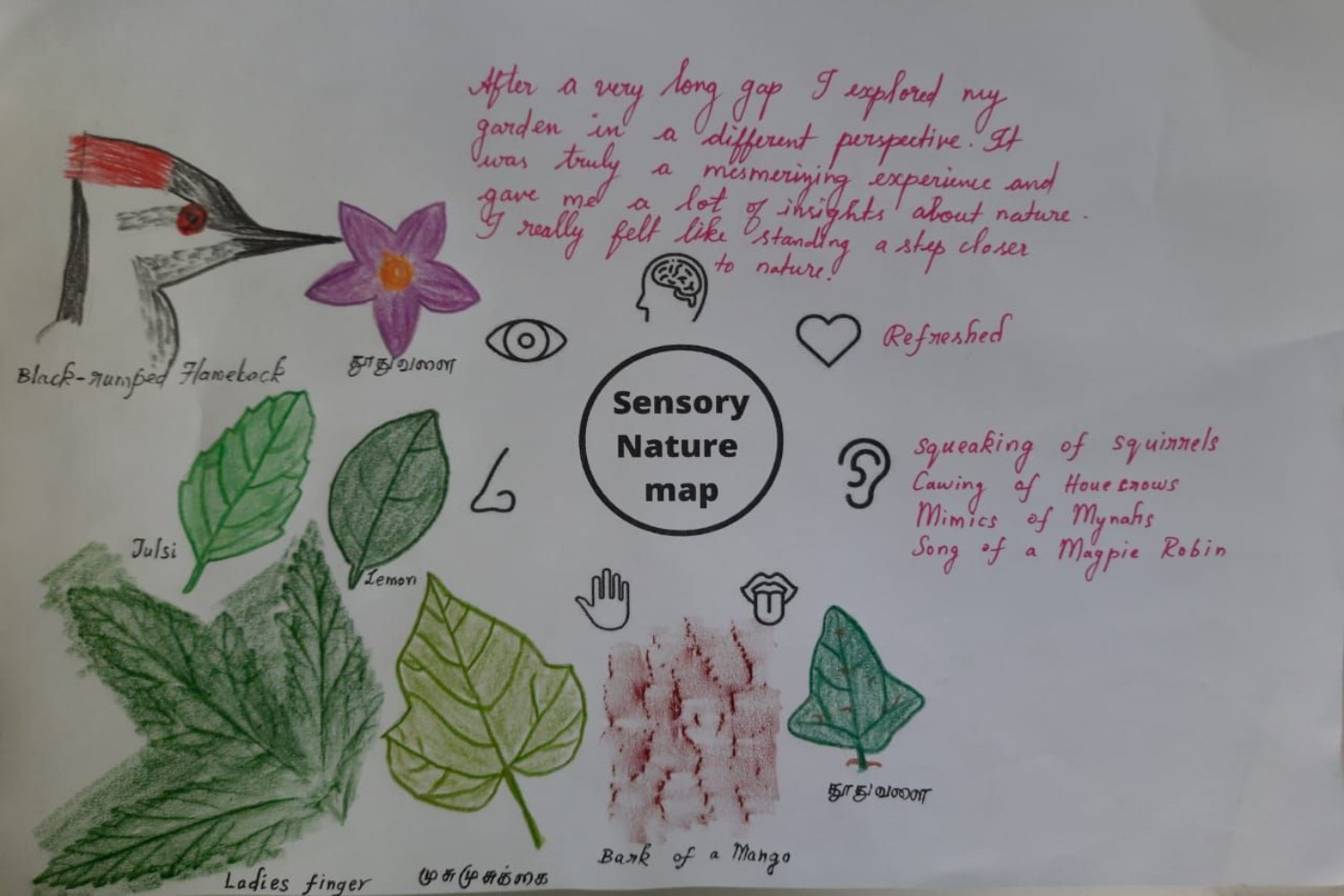
Sensory nature map
Experience and reconnect with the natural world around you. Create a Sensory Nature Map using the following steps:
- Take a notebook and some writing/coloring materials, and find a space where you can safely access nature.
- Find a spot where you can spend some time (~20 mins) in silence.
- This can be a neighborhood park or garden, potted plants and other corners at home, or even views from your window, balcony, or terrace.
- Use all your senses (sight, touch, smell, hearing, and taste) to experience nature and nature beings in this space. Notice your feelings, thoughts, body sensations, and memories.
- Write about/draw your experience to create a sensory nature map reflecting the time you spent in nature.
A nature-based home learning program: ideas and beginnings
A nature-based home learning program can be incorporated into various aspects of a child’s everyday life and routine.
One of the best ways to begin is to find a way to help children experience their immediate surroundings by using all their senses. By focusing on one sense at a time, we are likely to experience the same physical space in many different ways.
Spaces—from the kitchen to the bathroom, from everyday waste to the walls, corners, ceilings in our homes, and pavements outside, every nook and every corner holds a surprise.
Look out for the house gecko darting behind your curtains and mirrors at home making clicking ‘tuk-tuk-tuk’ sounds, the common and very tiny disc web weaving spiders that dart in and out of their silken retreats, the bagworm moths that cling on stubbornly to our walls, the ants that make themselves at home in our kitchens and our potted plants, the little weevils that like to bury in our ata flour, to the stray moth that flies in to the lit fluorescent tube. All these can become topics to ask exploratory questions around, to observe, to take delight in, and to get young children to empathize with by using storytelling as a tool, just like the students did for their spider friend.
In a year-round exploration, as the months go by, look for how things change in nature. The weather, the trees, the insects, and the birds you see. There is so much that we often assume about the plants around us. During a visit to a local school that had an Indian almond tree in the compound, the teacher stated that all leaves are green. However, one student had keenly observed the leaves of the almond tree in the school compound and pointed to the multi-colored hues of the leaves—yellow, orange, and deep red in the canopy.
Festivals and local practices often have a lot of nature stories and connections that children enjoy exploring. Reflect on your life and childhood to see what anecdotes you can share with children.
Is there a special encounter in the outdoors you recall in vivid detail? How can you use that to encourage the children around you to embark on their own nature journeys?
Serendipitous encounters
A nature walk or just time spent observing a tree in your neighborhood can be filled with surprises. How can we learn from these surprise encounters in nature?
Unexpected visits by different creatures or observing fascinating natural phenomena unfold can hold immense potential for discussions and learning.
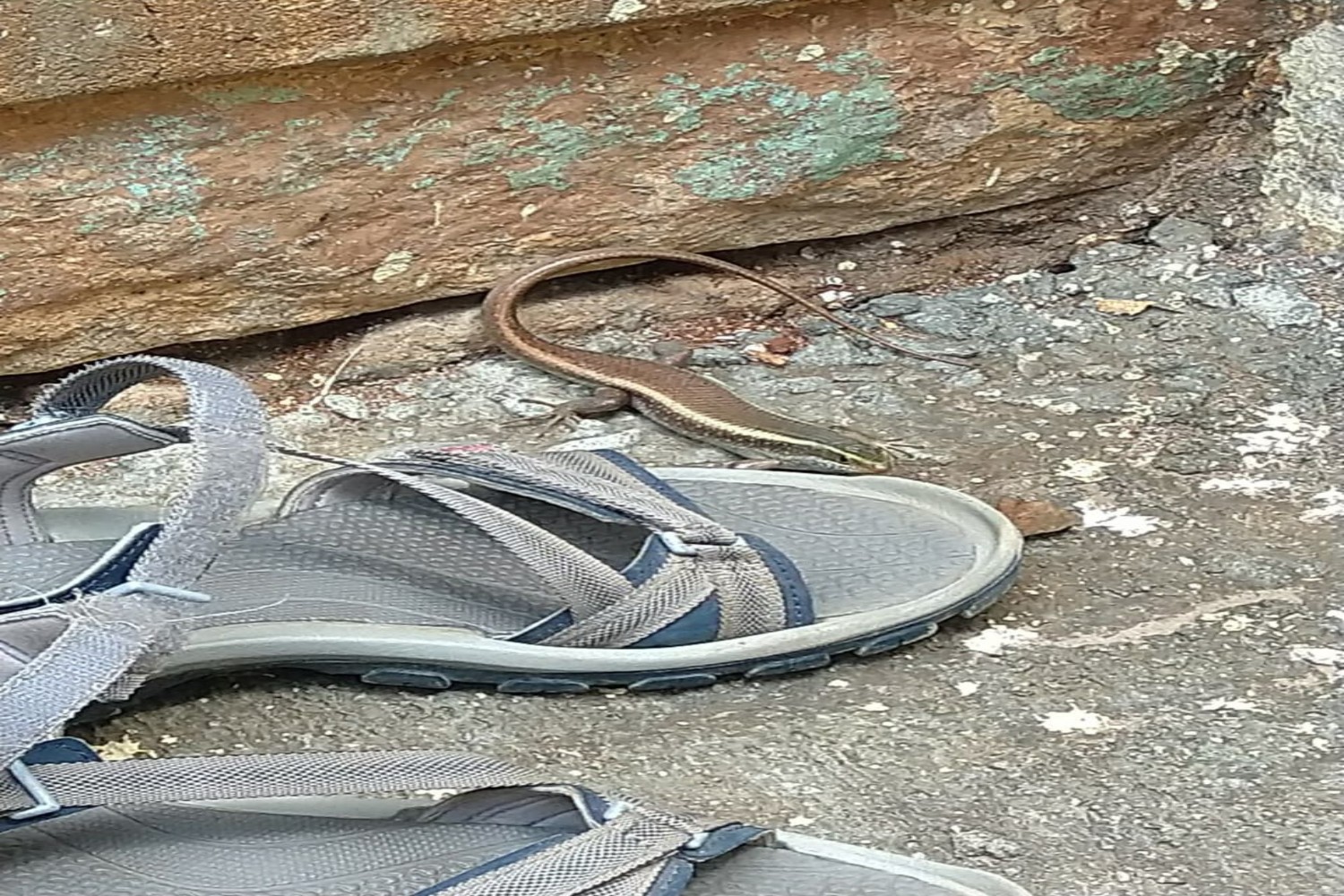
A pair of skinks, that had made their home near the compound wall of a school we work with, provided one such opportunity for us. As the skinks moved around the concrete floor and basked in the sun, some children watched and followed, asking questions and making observations. They noticed the color and patterns, the number of legs, the tail, and the mouth.
This encounter was not part of our lesson, but was a great opportunity to talk about skinks and even other reptiles, as children asked how skinks were different from snakes. Children shared anecdotes and stories, bringing the classroom alive with their own lived experiences. A brief encounter on the school grounds had so much to offer—a chance to listen to and value observations while simultaneously creating opportunities for new learning.
Learning together: role of grown-ups
Who is a nature educator? Can parents, grandparents, older siblings, and other grownups in a child’s life play this role?
An interested and enthusiastic grown-up, who is willing to learn and discover their surroundings, is probably the best kind of facilitator for an exploration of the natural world.
To begin, one does not need to know the names or very much about how things work in nature. Just plenty of curiosity and a willingness to wonder and ask questions!
Planting pollinator-friendly plants
Try and grow a diverse set of plants in areas you have access to—no space is too small. Keep plants in small pots, old bottles and containers, old vehicle tires, or even worn-out shoes! Plants that are diverse in shape, size, and color, and include shrubs, herbs, and grass. This diversity of plant life will attract a lot of insects, spiders, and even birds that children can observe up close.
Authors’ note
Since 2018, the Nature Classrooms project has been working closely with schools and educators to connect learning to the natural world. We develop user-friendly nature-learning resources that are age-appropriate, locally and culturally relevant, and encourage children to engage with nature through hands-on and inquiry-based learning. These resources correspond to existing primary school Environmental Studies (EVS) curricula and can be integrated into classroom teaching. In addition, we conduct capacity-building workshops for school teachers and educators across different organizations.


No approved comments yet. Be the first to comment!