
Making sense of the partition of India through fiction
This review essay discusses Veera Hiranandani’s young adult novel "The Night Diary" and shows how reading historical fiction can help us develop the historical imagination. Through a close reading of this novel, which deals with the partition of India, the piece shows how engagement with such works of fiction can help us develop an intimate and nuanced sense of historical events and processes.
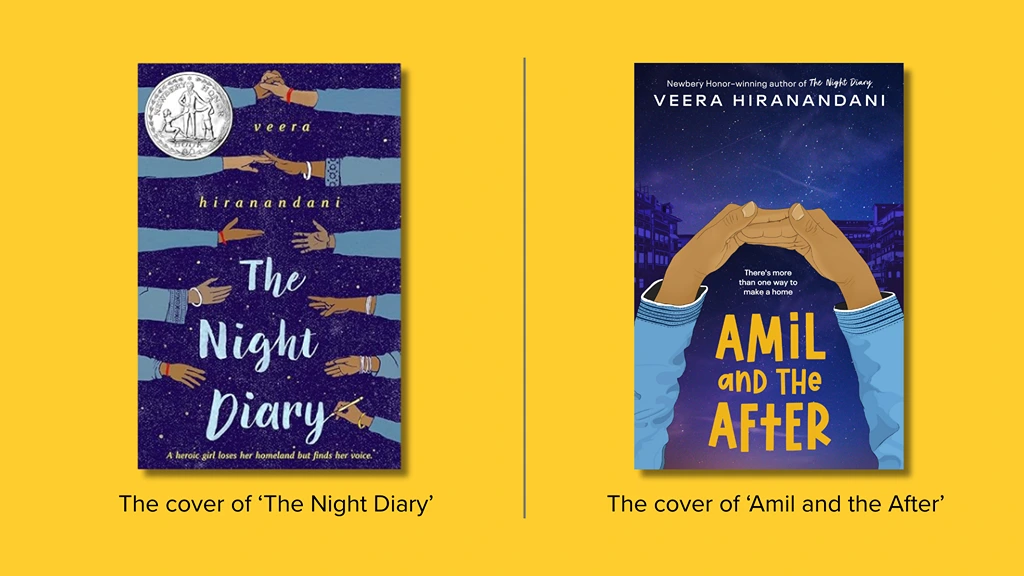
Historical fiction occupies a unique and necessary space in literature. It does more than recreate the past. It restores human voices to events that are often flattened into dates, borders, and political summaries. Where textbooks offer structure, historical fiction offers texture: the smell of fear, the intimacy of loss, the stubborn endurance of hope. It allows readers to inhabit history emotionally, not just intellectually. From the Partition stories of Saadat Hasan Manto and Ismat Chughtai, which lay bare the brutality and grief of 1947, to Min Jin Lee’s Pachinko, which traces the intergenerational struggles of Koreans in Japan, such works share an intimate view of history as lived at the level of ordinary families. The Night Diary, written for young adults, stands firmly in this tradition, offering a deeply intimate portrait of the Partition of India through the eyes of a child.
The novel is set against the backdrop of the 1947 Partition of India and is told through the eyes of twelve-year-old Nisha, who is half-Hindu and half-Muslim. When her family is forced to flee from what becomes Pakistan to India, Nisha confronts questions of belonging, identity and loss at an age when the world should still feel safe and predictable. Her mixed religious identity makes her internal conflict especially poignant, as the newly drawn borders force people to choose sides that do not always reflect their lived realities.
Told through letters to her deceased mother, the narrative feels deeply personal and immediate. Nisha often wonders how her mother would have responded to the fear, violence and uncertainty surrounding her. These letters become her anchor, a space where she can speak freely, grieve quietly, and make sense of a world that has suddenly fractured. Her longing for her mother’s presence runs parallel to her search for a sense of self in a divided land. In many ways, the act of writing becomes her survival tool, helping her preserve memory, identity, and emotional stability amid chaos.
Hiranandani’s use of a child’s voice is especially effective. Nisha’s innocence, confusion, and quiet resilience lend the story an emotional honesty that avoids melodrama. Through her eyes, the vast and brutal history of Partition becomes intimate and human. It is revealed not through statistics or political rhetoric but through everyday fears, exhaustion, small kindnesses, and fleeting moments of hope.
One of the most moving elements of the book is Nisha’s bond with her twin brother. While Nisha is reflective and inward-looking, her brother is expressive and outspoken, often saying aloud what she struggles to articulate.
The supporting characters further enrich the story. The gentle and protective cook Kazi challenges religious boundaries through his compassion and loyalty. Nisha’s emotionally restrained father reflects the quiet burden carried by adults who must make impossible choices for their families. The deeply religious grandmother represents the comfort faith can offer in uncertain times. Together, these characters deepen the novel’s exploration of identity, home, and humanity.
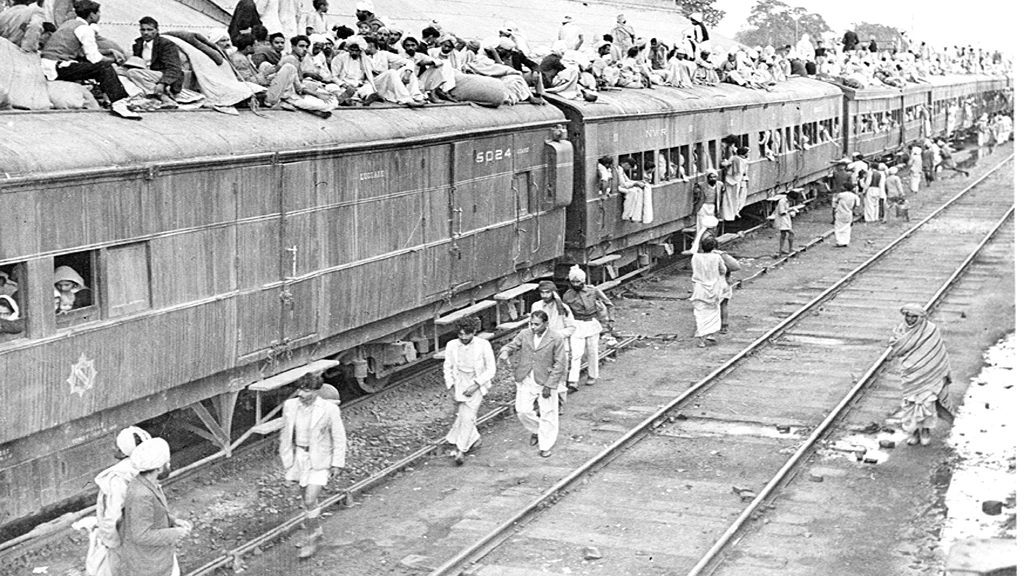
The narrative follows a span of a few months in a linear, chronological journey, moving from their home in Mirpur Khas in the Sindh province of present-day Pakistan to a dangerous, emotional, and physical trek across the new border to Jodhpur in newly independent India. As the days draw closer to independence, the violence intensifies. Nisha remains confused about why Gandhi cannot step in and resolve the chaos. There are also references to Jinnah as the leader demanding a new country for Muslims and Nehru being appointed the Prime Minister of independent India. Nisha is able to grasp only fragments of meaning from these names. As a twelve-year-old, she struggles to comprehend the full gravity of what is unfolding around her.
A key source of the novel’s strength lies in its simple and evocative language. Hiranandani’s prose is accessible for young readers while still carrying emotional depth. This makes the book both readable and reflective without diluting the gravity of its subject.
The Night Diary left me thinking deeply about displacement and belonging long after I turned the last page. For readers familiar with Partition literature, the book stands out for its restraint and emotional clarity. It presents history through a child’s eyes and allows light to emerge even from one of the darkest chapters of the subcontinent’s past.
The book is well suited for young adults and adult readers who wish to explore the 1947 Partition through a deeply human and personal lens. It reminds us that historical fiction does more than revisit the past. It invites readers to imagine futures shaped by empathy, memory, and tolerance.
For educators working with young adults, The Night Diary is especially relevant as a teaching tool for empathy, identity, and dialog. The novel creates an accessible entry point for conversations about displacement, communal tensions, and coexistence.
The novel is followed by a beautiful sequel, Amil and the After, where the narrative shifts to the brother’s voice as the family settles in newly independent India. Together, the two books offer a moving portrayal of survival, rebuilding, and the long shadow history casts on personal lives.
Details about the book: Veera Hiranandani. 2019. The Night Diary. Penguin.

Related Articles
By | February 6, 2026
No approved comments yet. Be the first to comment!