
The role of leaders in organizational change processes
This article explores how a nonprofit leader navigated post‑pandemic strain, using OD practices—deep listening, facilitation, and shared leadership—to rebuild trust, distribute responsibility, and reconnect the organization with its core purpose.
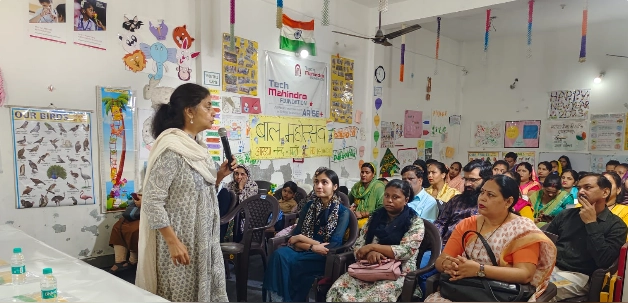
Photo credit: ASTHA
This is Pratik’s narrative about his journey with the OD&D Fellowship Program (run by Wipro Foundation and facilitated by Sujatha Rao), and how he experienced change—changes in him as a leader and changes that he attempted to bring in ASTHA, the CSO he leads. It is a personal, open and honest account of what it means to lead a non-profit in an increasingly volatile and chaotic world. These are his experiences and emotions. But they also serve as a universal vantage point from which we can extract learnings about OD&D and about leadership.
Throughout this narrative, there are reflective questions that have been shared. These are meant to alert the reader toward key points emerging from the story as well as to pause and reflect on ideas and experiences that resonate from Pratik’s own experiences.
Where trust builds belonging
I joined ASTHA as an intern in 2016 spending 40–45 days immersed in the community. My first assignment was in Lal Kuan, an urban village in Southeast Delhi, where I worked closely with families of children with disabilities, learning about their struggles with access to education.
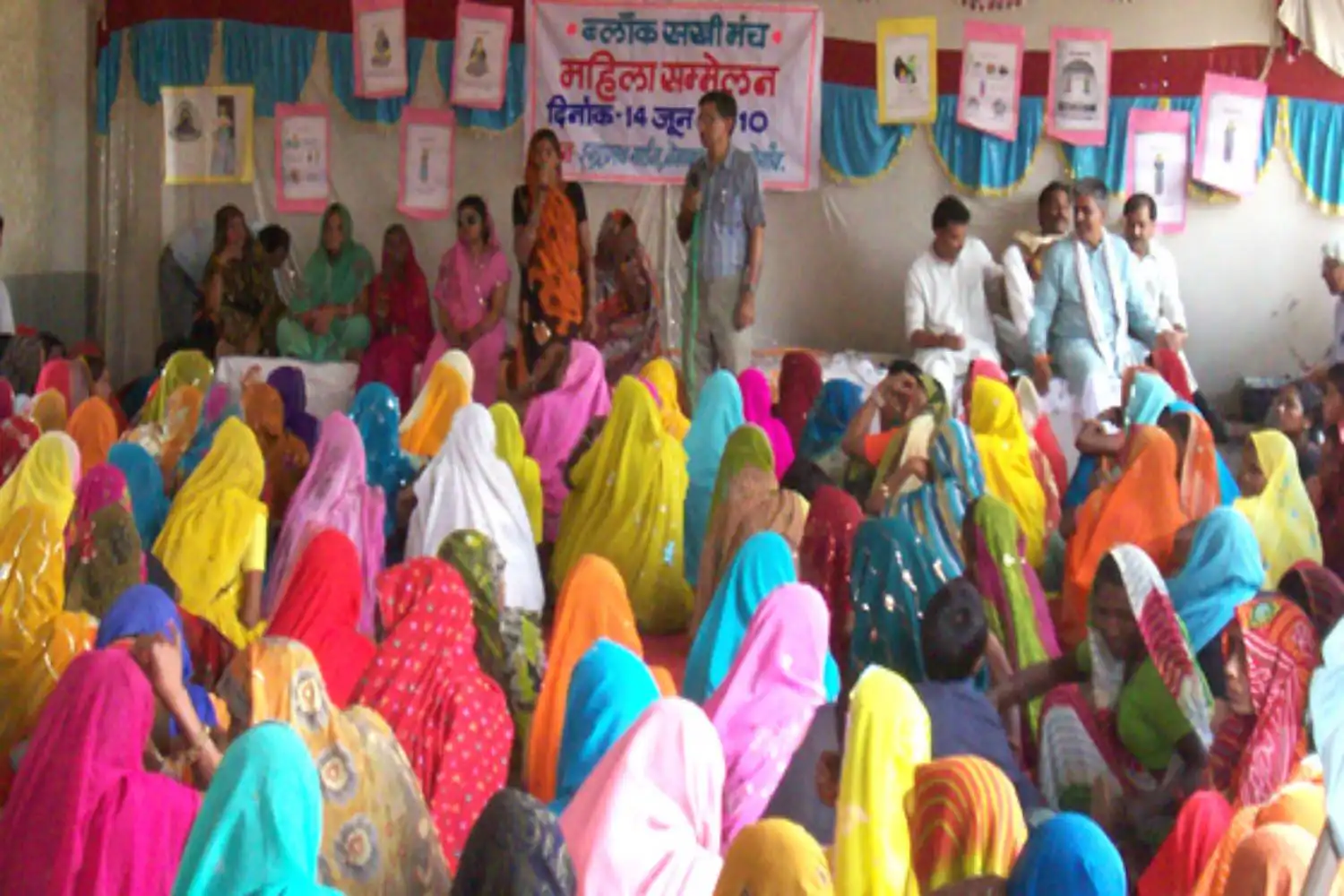
ASTHA’s leadership structure intrigued me. The then director was young, and I observed how the organization fostered community engagement through ‘sameelans’. These were structured community meetings, often held in open spaces, where residents could speak about all their challenges and collectively identify ways forward. More than meetings, these were platforms that gave legitimacy to people’s voices.
Despite being just an intern, I was given the freedom to explore and contribute, which left a lasting impact on me. The freedom I experienced at ASTHA was unlike anything I had experienced in school or college. The trust the organization placed in me, and the way people treated one another, with dignity and respect, was exceptional. Even those who had been there for decades spoke to young newcomers as equals.
I often attended meetings where emotions ran high, yet the overarching message was always encouragement: “Try it out, there’s freedom”. Observing Radhika’s (ASTHA’s founder) interactions with the community, I saw dignity in practice, which resonated with me. ASTHA’s work culture was built on trust rather than micromanagement. People focused on their responsibilities, had meaningful conversations, and kept things moving forward.
Prompt (by Sujatha Rao): Culture is the tacit values and belief systems that runs through an organization. It becomes explicit through the structures, everyday interactions between people, decision making processes, routines and habits that an organization practices on a day to day basis. Through Pratik’s narrative, what are characteristics of ASTHA’s culture that emerge? Thinking of your own organization, what cultural characteristics can you identify?
Stepping into leadership roles within ASTHA
Starting as a Program Manager with a public health background, I led research on encephalitis and disability rights in Gorakhpur. Encouraged by the leadership, I transitioned to Assistant Director, focusing on program oversight for three years under the founder’s mentorship. Eventually, I was appointed Executive Director, assuming full responsibility for finances, ethics, and administration as the founder stepped back. I have led the organization in this capacity for the past three years.
Organizational challenges
Post-COVID, we faced a series of interconnected crises that strained our foundation. Our outreach exploded from 250 to 2,000 families. We couldn’t just provide rations; we became responsible for their therapies and emotional support, far exceeding our capacity. We were forced into unfamiliar remote work.
New CSR-driven funders demanded digital data and rigorous reporting that replaced our traditional trust-based reporting systems. The weight of collective grief and exhaustion broke our communication. Long-time colleagues stopped talking, and many of us struggled with mental health, feeling unheard as our usual spaces for reflection vanished. Losing our Assistant Director, a key finance expert, left a massive void and created intense administrative pressure.
The spaces where we once gathered for discussion were replaced by relief work, leaving the team exhausted. We had recognized the organizational challenges and knew change was needed. We also realized an external perspective was essential to help us navigate these challenges. As a context-driven organization, we recognized the need for dialogue. While we could have handled many conversations ourselves, some of us felt an external perspective was necessary to move forward. We realized we couldn’t fix this alone. We turned to the OD&D Fellowship as an external lens to help us navigate this exhaustion and structural shift.
Prompt (by Sujatha Rao): All organizations resolve conflicts and tensions continuously. The nature of these keeps evolving and changing depending on both the external as well as internal contexts in which the organization operates. Sometimes these tensions emerge from changes in the broader ecosystem in which an organization works in—policy or funding changes for example. Sometimes these are internal changes—employees leaving or leadership transitions. Reading Pratik’s narrative, what are some key challenges that ASTHA faced? Are there similarities with the kind of challenges that your organization has experienced or is experiencing currently?
My personal context
On a personal level, I wasn’t in the best place at the time. There was a feeling of helplessness. I thought the organization’s expansion rested solely on me, not the collective. Personally, I needed clarity to understand if harm was stemming from me and to address the organization’s challenges at different stages.
That internal struggle also influenced my decision to join the fellowship program. I was fundamentally asking the question “What kind of a leader am I and what kind of leadership is required for ASTHA?” I was a young person stepping into a senior leadership role in a mature organization.
In a way, I was managing people senior to me. It did create anxieties and confusion about my own approach and how I could take ASTHA forward in a post-covid world, but with the same sensibilities and principles that ASTHA had always anchored. I entered the fellowship program with this mindset.
Prompt (by Sujatha Rao): Studies indicate that leaders often carry enormous stress and responsibility for decision making within their organization. But research also indicate that different leadership approaches and styles help distribute organizational decision-making risks and responsibilities beyond positional leaders. As organizational leaders, what worries, stresses and anxieties do you carry about your own leadership approach? Do any of Pratik’s worries resonate with you?
Starting the change journey
Right from the start, the fellowship felt like a really safe space for me. It made it easy to be vulnerable, which came naturally. It also helped me let go of the performative side of leadership that we sometimes fall into. The way it was designed, the spotlight was never just on you. You felt safe, but also that what you brought mattered. Having a peer mentor was incredibly powerful, I felt extremely safe and comfortable with my peer partner Anu, who was the external fellow paired with me for this program.
I was also happy that ASTHA’s issues were being discussed by people without the baggage or burden of being insiders in ASTHA. So, it was a very empowering process for me. The fact that we were speaking about things beyond the immediate issues that ASTHA was facing was meaningful for me.
We had been talking about change in ASTHA for over two years before joining the fellowship program. But thinking through and working on change through OD&D principles was a game changer for me.
Prompt (by Sujatha Rao): All OD&D work needs some essential pre-conditions and ‘culture’ for the intervention to work. What are some key requirements for good OD&D work emerging from Pratik’s account? What is the role of an external OD&D consultant? How does that shape the OD&D process within the organization?
Key steps and changes in ASTHA
The first thing that Anu and I did was to introduce facilitative tools to the ASTHA team. And my God, the conversations that followed were an eye-opener. Even with people I’ve known for years, these new formats allowed their voices to truly shine.
By pausing deeply to listen, I realized that this is ASTHA; these individuals have imbibed so much of the organization’s spirit. They don’t just see the problems. They already possess the solutions. This shift toward deep, structured discussion was easily the most powerful thing I did in the fellowship.
Prompt (by Sujatha Rao): Numerous studies and research have indicated that the being heard, seen and feeling valued is often the most important thing for employees. Reflecting on Pratik’s experience of the first steps in ASTHA, how often and how openly does deep listening and sharing happen in your organization? What opportunities do you have to share your thoughts, ideas, yourselves with others in the organization? What does your organization do to make people feel safe and courageous so that they are open and willing to share?
The intervention and its ripple effects
Recognizing the power of these deep conversations, we started a safe, facilitated, structured space called “Ek ASTHA, Anek Kahaniya” (One ASTHA, many stories) where people could share their thoughts, hopes, frustrations, and aspirations—and each story became part of ASTHA’s larger story. We rolled this out with many groups across the organization. The idea was to turn existing meeting spaces, like our monthly meetings, into real conversations, using the tools and processes we were learning in the fellowship. I usually facilitated these sessions, but others did too. For me, it was revealing—I realized just how much courage people in the team had, something I probably hadn’t noticed before.
We then realized that the team took the same tools and facilitation ideas into the communities that they were working with as well. People fell into patterns of thinking of divergence and then convergence. This sort of activity was new but also quickly became a pattern of thinking.
Prompt (by Sujatha Rao): OD&D literature suggests that the complexity of organizational change is rarely managed through complicated and over-engineered change processes. Instead, small incremental changes help prepare people within the organization for change and creates the enabling structures needed for the change to sustain. What ripple effects of small, incremental changes in the organization is visible from this narrative? What methods could be used in organizations to scale change, but in small everyday changes with minimal harm and disruption?
Impact on self and the organization
For me, having the opportunity to talk to Anu (my fellowship partner) consistently throughout the program and think through what we wanted to do was useful. Anu spent time with the team, facilitating some sessions and this created more openness in people in willing to share their thoughts with others.
I think going back to what we did with “Ek ASTHA Anek Kahaniya”, bringing those structures and tools into our conversations, people loved it. I loved it. And my primary desire is to continue with this facilitated process in all our other spaces and structures.
I also want us to use these tools around all our conversations—in our staff meetings, and in our community spaces. I want to be able to continue to build this. And as people tell their own stories, they also talk about ASTHA’s culture and their desires. I want to be able to do a video series around this.
Prompt (by Sujatha Rao): What is needed within an organization to be able to continue with and institutionalize OD interventions? What ideas emerge from Pratik’s narrative?
Leadership and change
Through this process of storytelling, problems and solutions have emerged from the team itself, shifting my perspective on leadership. The weight of carrying ASTHA’s legacy alone has transformed from a singular “I” into a collective journey. I’ve realized that I am not ASTHA, and ASTHA is not me. The organization has its own life and the capacity to move forward through group decisions.
This fellowship has been an eye-opener, teaching me that leadership and change are constant. When people feel empowered and passionate, leadership happens naturally, regardless of who is “in command”. I am no longer worried about the organization’s future. My role will evolve alongside everyone else’s, while ASTHA remains focused on its core purpose and the people it serves. This transition from individual responsibility to collective ownership is a shift I now hope to embed throughout the entire organization.
Prompt (by Sujatha Rao): Management literature abounds in the promise of exceptional leaders! Evolving thinking from critical management studies, and authentic leadership suggest that a different kind of ‘leader’ is needed to steer complex organizations in an increasingly volatile and uncertain world. What key lessons about leadership emerge from Pratik’s reflections? What kind of leadership does he embody?
Acknowledgement: The author is grateful for the support provided by Sujatha Rao in looking at multiple drafts of this article and for providing the reflection prompts for the readers.
Editorial Note on ASTHA: ASTHA is a three-decades old community-based organization operating in the slums of Delhi, dedicated to supporting children with disabilities and their families through a Community-Based Rehabilitation (CBR) approach. With a team of 40 full-time employees over half of whom are individuals with disabilities or family members of persons with disabilities, ASTHA prioritises community engagement, ensuring that its work is deeply rooted in local experiences and needs. Their core principle is inclusive development, ensuring that every child, regardless of age or severity of disability, is integrated into formal systems of growth and support. ASTHA has focused on building resources for children with disabilities at home. It also operates a National Disability Helpline staffed by adults with disabilities, many of whom were originally supported by the organization. ASTHA now aims to strengthen its role as a resource organization, formalizing training programs and data-driven initiatives to enhance its impact.

No approved comments yet. Be the first to comment!