
My journey into school education
This reflective essay traces a lifelong journey into education rooted in grassroots work with marginalized communities. Drawing from decades of work, it challenges dominant narratives and foregrounds lived experience. The article argues that equity, collaboration, and listening are central to meaningful educational change.
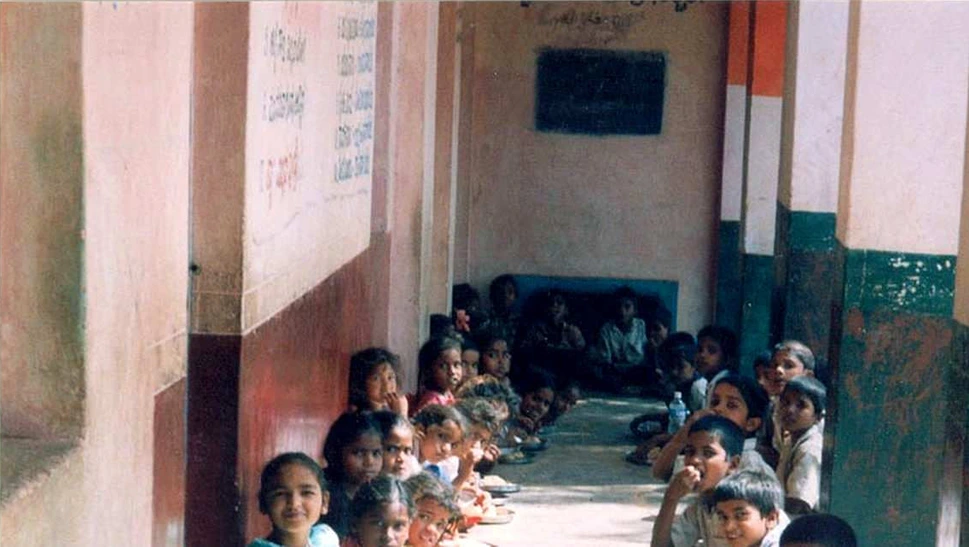
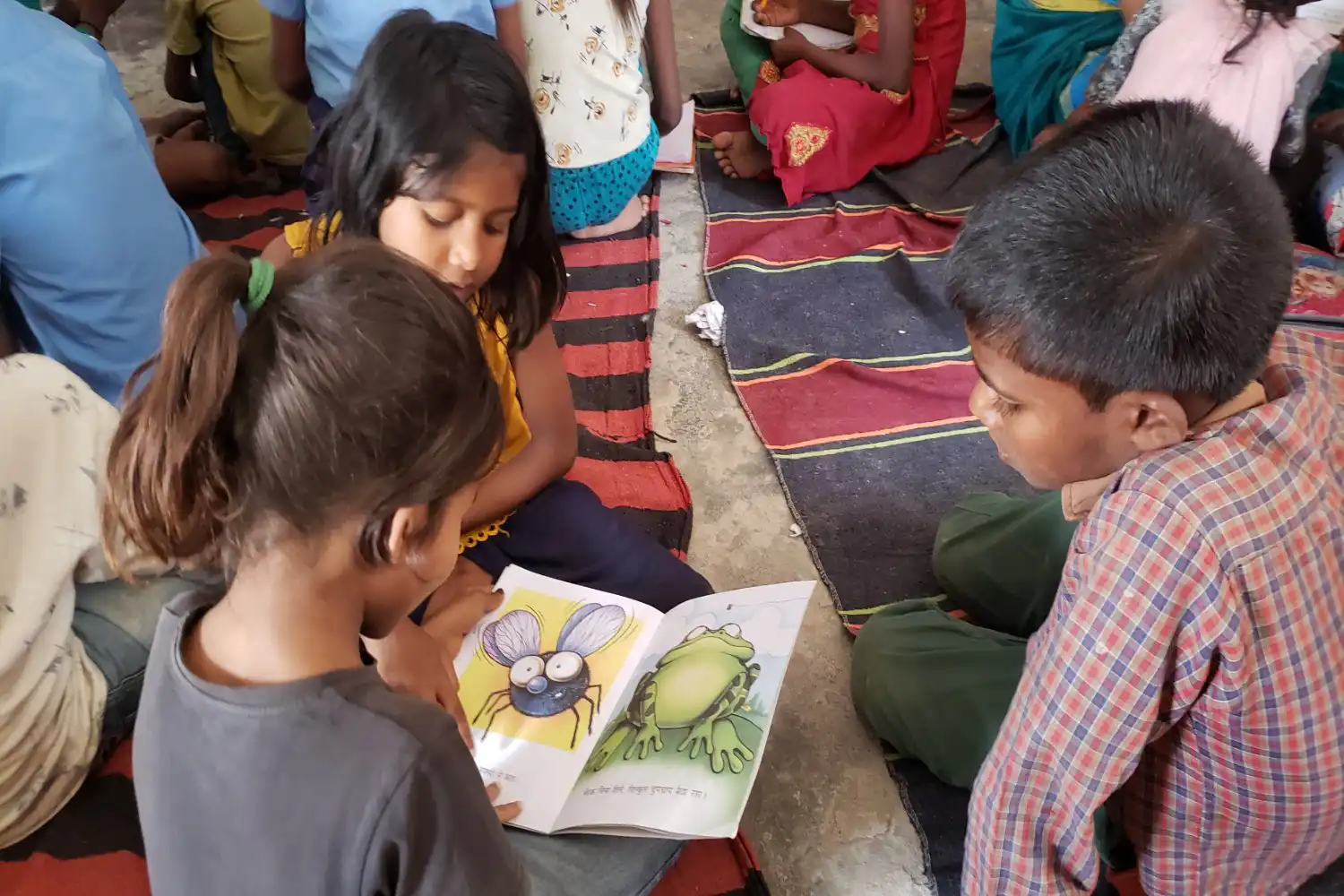
Photo credit: Vani Periodi
In the late 1970s, when I was working on my M.Phil. thesis on the non-Brahmin movement in Tamil Nadu, I spent a considerable amount of time researching Dalit movements across the country. At that time, I remember thinking, lack of access to quality education was perhaps one of the key factors that led to the disempowerment of Dalit and Tribal communities in almost every corner of India. After I completed my degree, I wanted to switch from Political Science (which was the discipline I was trained in) to Education.
Most academic institutions and departments were not comfortable giving me an opportunity to switch. In fact, one famous educationist and professor told me that I did not have any basic training in education, therefore, they would not be able to offer me an opportunity. At that time, I let it be. However, by mid-1980s, I had an opportunity (thanks to Mr. Anil Bordia and Dr. Sharada Jain) to design Mahila Samakhya—a government program for the education of girls and women. This was an unexpected turning point for me, and I did not look back. A formal degree in education was not essential to educate myself in a field that I felt passionate about.
Through Mahila Samakhya, I realized that more than formal education per se, enabling women to reflect on their life experiences, and in the process to help them access information and accumulate knowledge effectively enables them to negotiate the world they live in from a position of strengthi. Mahila Samakhya focused initially on enabling marginalized women to form groups (Mahila Sangha/women’s collectives) and address the issues/challenges they face on a daily basis.
In this process, women began to recognize and articulate the need to address the education of their girls. The program then designed strategies to enable out-of-school girls to re-enter formal schools. It also tried to create forums whereby adolescent girls (most of them out of school) could organize themselves into collectives and address the barriers that kept them away from schooling.
In the late 1980s, the availability of schools beyond the primary level was a challenge. Girls (and boys) had to travel long distances to enroll in secondary schools. This was one of the factors that contributed to poor transitions and high dropout rates. Equally, as more and more poor (read Dalit and Tribal) children entered formal schools, the well-to-do and middle-classes gradually started opting out of government schools. The private sector was gradually expanding in both urban and rural areas.
With the exit of the better-off from government schools by the mid-1990s, the quality of education in government schools went down. The exit of the better off meant that the schools lost the parental oversight of those who could influence, ask questions, and hold the school accountable. The change in the composition of the children meant that the peer learning possibilities from diversity also got reduced.
With the divergence in the social background of the teachers and children; issues of motivation and interest also emerged. Middle-class teachers were not empathetic to the social and economic situation of children in diverse poverty situations. They believed that children and parents were not motivated for education. Many of them also believed that tribal children were ‘not capable’ of learning (Ramachandran et al. 2005ii). Equally, as more and more children enrolled in government schools, teacher-pupil ratios went through the roof.
Loss of interest among administrators and politicians further exacerbated a rapidly changing situation in government schools (Ramachandran, 2014iii). The changing composition of the school led to the rich and the influential either exiting ordinary government schools and enrolling in private schools or opting for special category of government schools like Kendriya Vidyalaya or Navodaya Vidyalaya.
The government ensured that these special government schools had adequate resources and also maintained quality. The dominant narrative was that the poor were not interested in sending their children to schools, they did not support their daughters and more importantly schooling was not a priority. However, our field/grassroots experience—mainly through Mahila Samakhya—revealed that the poor were not only keen that their children be educated in order to break out of the cycle of poverty, but they also knew how valuable education was to enable their children to navigate the world they live in.
There was a disconnect between what the dominant narrative was and our own grassroots experience across Mahila Samakhya states, namely UP, Gujarat, Karnataka. Andhra Pradesh, undivided Bihar and Madhya Pradesh, and Assam. This enabled us to understand the complex situation. The Mahila Shikshan Kendra (MSK) was a roaring success. Hundreds of out-of-school girls enrolled in the short-term residential programs to find their way back into the formal school system. It may be recalled that in the early 2000s the Government of India (MHRD) designed the Kasturba Gandhi Balika Vidhyalaya Scheme (KGBV) based on the experience of the MSKs of Mahila Samakhya.
After completing a five-year tenure as the National Director of Mahila Samakhya, I started looking for opportunities to work in education. Thanks to the support of a NGO called ASPBAE (Asia Pacific Bureau of Adult Education), PRIA (Participatory Research in India), and UNESCO, I got the opportunity to anchor a four-country (South Asia) study on the status of girls’ education (Ramachandran (Ed) 1998).
This was my formal entry into educational research. This was an exhilarating period. I read and absorbed the prevalent literature on school education and the world of educational statistics. I also got an opportunity to interview many people in Bangladesh, Nepal, and India (I could not travel to Pakistan due to VISA restrictions). I met NGOs across these three countries to understand their experiences. I also had the opportunity to collaborate with fellow researchers.
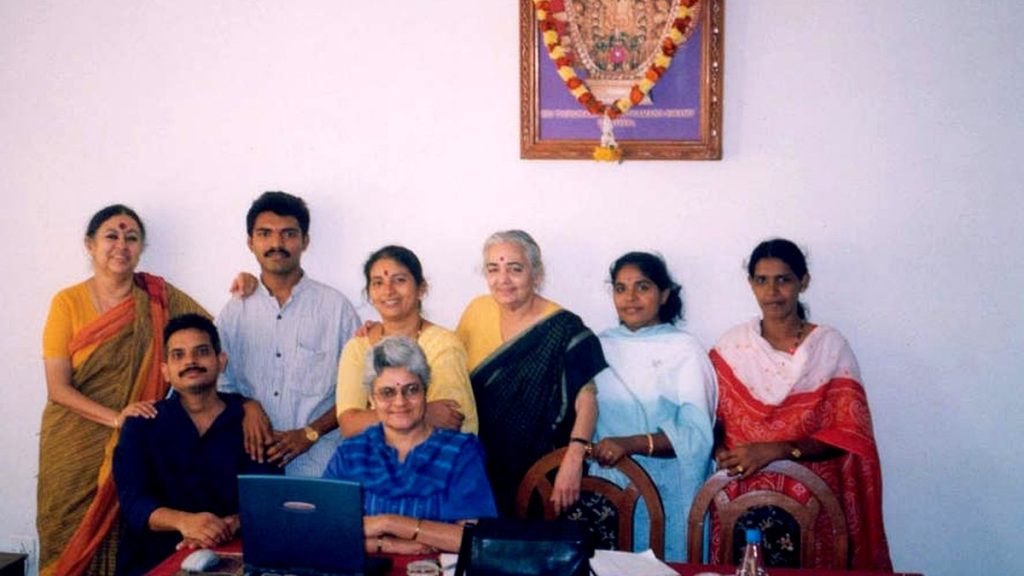
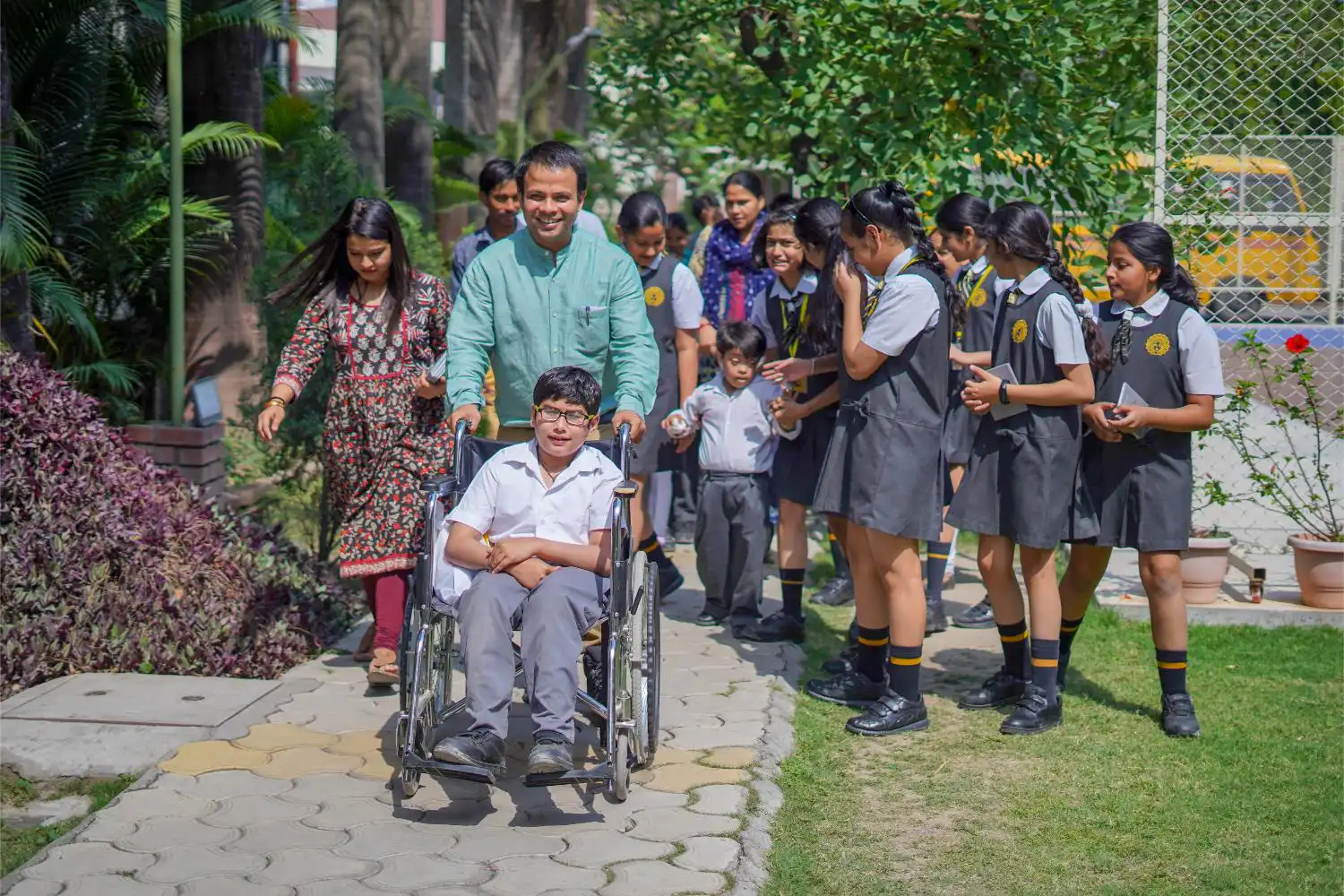
Photo credit: Vani Periodi
This research deepened my understanding of school education, gender inequality, and most importantly social inequalities that kept marginalized communities out of the ambit of school education. The disconnect between dominant narratives and ground realities hit home once again. This research, anchored by me, led to the edited book published in 1998 by UNESCO– “Bridging the gap between intention and action – Girls and women’s education in South Asia”iv.
Having done this piece of work, I tried in vain to enter mainstream educational research institutions/NGOs doing educational research. At that time, a director of one such institution, called me an upstart who had stumbled into education. This only strengthened my resolve. Along with former Mahila Samakhya colleagues, Kameshwari Jandhyala and Nishi Mehrotra, (all of us without any ‘formal’ academic training in education), we set up Educational Resource Unit (ERU), a company that would engage in research, training, and handholding NGOs and state governments to initiate and implement field-based programs focused on both gender and social equity. This was in the year 1998.
This was also a time when there was a lot of donor interest in equity issues (especially the donors/multilateral agencies supporting Government of India’s District Primary Education Project (DPEP) and later Sarva Shiksha Abhiyan (SSA). Soon after the registration of ERU, we bid for research projects advertised by the government and donors. We won the first bid–Getting Children Back to School (DFID – Department of International Development United Kingdom and GoI)v.
There was an uproar among mainstream academics in education departments in Delhi, who accused us of ‘privatizing’ educational research. We ignored this and focused on our work. Just as we were wrapping up this work, we bid for more studies and were awarded research studies on equity, access, and inequality and another qualitative study on factors that facilitate or impede successful primary school completionvi and inclusion and exclusion in schools and classrooms (Ramachandran, Vimala and Tara Naorem. 2013vii).
Our work was primarily qualitative. However, our methodology was anchored on solid empirical study of existing educational data. Within five years, ERU came to be recognized as an important institution doing qualitative research and coordinating multi-state research studiesviii. We were also asked to provide training on research methodology, attitudinal change among teachers and school administrators and handholding research teams engaged in qualitative research.
Over a short period of five years, our publication record was noticed. Gradually and grudgingly, mainstream academic institutions—especially NCERT—recognized our work. In 2004, we were invited to be part of the effort to reformulate the National Curriculum Framework. Meanwhile MHRD (GoI) continued to support several research studies and also engaged with us on their girls’ education initiatives—for example, on KGBV (Kasturba Gandhi Balika Vidhyalaya). The range of our research and training work continued to expand. In 2010, I was asked to chair a GoI taskforce on ‘Corporal punishment in schools’ and another on girls’ education. Several state governments invited the ERU (Educational Resource Unit) and associated teams in their work.
Working on equity issue logically culminated in engaging with government schoolteachers and why they are demotivated and disheartened—however, more importantly the way in which our teacher workforce is managed in Indiaix. Working with schoolteachers, administrators (especially district and sub-district levels) and teacher educators to conduct research was an important step toward developing research methodologies that enable the researchers to capture the voices of important stakeholders in school education.
Equally important was out efforts since the early 2000s to develop methodologies and research tools to bring in the voices of children who are directly impacted by the quality of education provided to them (Ramachandran, Vimala 2025 a and bx), the attitudes and practices among teachers and administrators, and most importantly the systemic problem of corporal punishment and conscious exclusion (Ramachandran, Vimala 2018xi).
Another parallel part of this journey was doing detailed case studies of important and influential government education programs like Lok Jumbish and Shiksha Karmi Project in Rajasthan, Education Guarantee Scheme of Madhya Pradesh and the work of NGOs working with women in children, for example Agragamee in Odisha, The Concerned for Working Children in Karnataka, and Kutch Mahila Vikas Sanghathan, to name a fewxii. Working on case studies of field-based programs with women and children involved developing and honing research tools and methodologies, which fed into our research and vice-versa.
What is my takeaway from this journey? Firstly, passion and commitment override any formal academic training. It is always possible to catch-up on ‘academic’ literature. Secondly, keeping your ears to the ground and trying to listen to and understand the lived realities of people is an important source of true knowledge—one that is rooted in the reality on the ground.
Thirdly, creating a network of researchers and investigators is critical to doing high quality research. The Mahila Samakhya network and former employees and field-based NGOs have remained a major source of strength. Most of our field-based teams and state-level team leaders were drawn from this network. They may or may not have formal academic training in research. However, rigorous training of a highly committed team to ensure that we capture the voices of the most underprivileged was very important.
Fourthly, no one can work in silos, and the academic world is full of fight over credits. We worked differently. We took the entire team into confidence and shared the project design and the budget. We did not shortchange people who did the most important work—field investigation. We also shared credit will all the people involved. Ours was always teamwork—anchored in the belief that knowledge creation is the work of people working together. Fifth and finally, we ensured we always produced high quality peer-reviewed work. We completed every project—be it research or training or policy development—on time.
My journey is not mine alone. It is closely intertwined with Kameshwari Jandhyala and Nishi Mehrotra and many other researchers who worked with us from time to time. Ideally, it is OUR journey.
Endnotes
- Vimala Ramachandran and Kameshwari Jandhyala, Cartographies of Empowerment: Tracing the Journey of Mahila Samakhya (New Delhi: Zubaan Books, 2009).
- Vimala Ramachandran, Madhumita Pal, Sharada Jain, Sunil Shekar, and Jitendra Sharma, Teacher Motivation in India and a Case Study of Rajasthan (research report contributed to a multi-country study on Teacher Motivation coordinated by IDS Sussex [UK] and Knowledge and Skills for Development [UK], 2005); Vimala Ramachandran, “Why Schoolteachers Are De-motivated and Disheartened,” Economic and Political Weekly, May 21, 2005.
- Vimala Ramachandran, “Equity and Quality Are Two Sides of the Same Coin in India’s School Education,” Occasional Paper no. 23 (New Delhi: Nehru Memorial Museum and Library, 2014).
- Vimala Ramachandran, ed., Bridging the Gap between Intention and Action: Girls’ and Women’s Education in South Asia (Bangkok: UNESCO-PROAP; New Delhi: ASPBAE, 1998).
- Vimala Ramachandran, ed., Getting Children Back to School: Case Studies in Primary Education (New Delhi: Sage Publications, 2003). (DFID-supported research study completed in March 2001.)
- Vimala Ramachandran, ed., Hierarchies of Access: Gender and Equity in Primary Education (New Delhi: Sage Publications, 2004); Vimala Ramachandran and ERU Team, Snakes and Ladders: Factors Influencing Successful Primary School Completion for Children in Poverty Contexts, South Asia Human Development Sector Report no. 6 (New Delhi: World Bank, 2004); Vimala Ramachandran, Fostering Opportunities to Learn at an Accelerated Pace: Why Do Girls Benefit Enormously? (New Delhi: UNICEF, 2004).
- Vimala Ramachandran and Tara Naroem, Inclusion and Exclusion of Students in Schools and Classrooms in Primary and Upper Primary Schools of India: A Synthesis of a Six-State Study (New Delhi: Government of India, Technical Support Group, Sarva Shiksha Abhiyan, 2013).
- Rashmi Sharma and Vimala Ramachandran, The Elementary Education System in India: Exploring Institutional Structures, Processes, and Dynamics (New Delhi: Routledge, 2009); Vimala Ramachandran, Bharat Patni, and Nishi Mehrotra, Equity in School Water and Sanitation: Overcoming Exclusion and Discrimination in South Asia (Kathmandu: UNICEF ROSA, 2009).
- Vimala Ramachandran, Suman Bhattacharjea, and K. M. Sheshagiri, Primary Teachers in India: The Twists and Turns of Everyday Practice (Bengaluru: Azim Premji Foundation, 2010); Vimala Ramachandran, Tara Beteille, Toby Linden, Sangeeta Dey, Sangeeta Goyal, and Prerna Goel Chatterjee, Getting the Right Teachers into the Right Schools: Managing India’s Teacher Workforce (Washington, DC: World Bank, 2018).
- Vimala Ramachandran, “Tracing the Path: From a Research Idea to Conducting the Research,” and Vimala Ramachandran, “Qualitative Research Methods and Tools: An Introductory Essay for Young Researchers,” in Introduction to Qualitative Research, ed. Hriday Kant Dewan and Vimala Ramachandran (Delhi: Aakar Books; Bengaluru: Azim Premji University, 2025).
- Vimala Ramachandran, Inside Indian Schools: The Enigma of Equity and Quality (New Delhi: Social Science Press; London: Routledge, 2018).
- Vimala Ramachandran and Kameshwari Jandhyala, Enabling the Most Deprived Children to Learn: Lessons from Seventeen Promising Practices (New Delhi: International Labour Organization and Government of India, 2007); Vimala Ramachandran, Management Case Study: Lok Jumbish—Rajasthan People’s Movement for Education for All (New Delhi: World Bank, 2003); Vimala Ramachandran, From Protecting the Jungle to Coping with the Road: Overview of Agragamee’s Efforts to Enable Tribal Communities to Negotiate from a Position of Strength (Odisha: HIVOS and Agragamee, 1996); Vimala Ramachandran and Aarti Saihjee, Flying with the Crane: Recapturing Kutch Mahila Vikas Sangathan’s Ten-Year Journey (mimeograph, 2000); Vimala Ramachandran, The Concerned for Working Children: Recapturing Their Journey (Bengaluru, 2000).
Related Articles
By | April 29, 2026
By | October 24, 2024
No approved comments yet. Be the first to comment!