
How bureaucratic orders shape everyday practices in government schools
This is the second part of a conversation between Yamini Aiyar and Rahul Mukhopadhyay. It takes Aiyar’s recent book 'Lessons in State Capacity from Delhi's Schools' as a starting point. The conversation explores her in-depth experience of working with the education administration system and shares the insights this experience has for civil society organizations (CSOs).

Government school in New Delhi
Photo credit: Wikimedia Commons/Rrthakur22
Rahul Mukhopadhyay: We have so far discussed the façade of power vis-à-vis the expressions of powerlessness among frontline bureaucrats, when we try and understand their everyday work. Do you see this at all levels? Would you say that this exists at the school level, at the block level, at the district level, and at the state level too? And are there similarities and dissimilarities at these levels? What do you think makes up much of this contradiction?
Yamini Aiyar: I think you are right in saying that these constraints are not unique to the lowest rung of the system. At every level, you will hear the same thing, and in any organizational structure, any type of bureaucracy.
The structures of State-Society relations more broadly, are always shaped by constraints. So, in some sense, we must be very alive to the constraints to try and understand how we move the layers of the constraints in different ways. For instance, social movements are very much about challenging the constraints, and the structures within which we operate. Similarly, what is needed is shifting the ballpark around which these constraints are created and the excuses that they make for society and societal actors to behave in certain ways.
In bureaucracies, it (the constraints) is much more exaggerated because the ideal type of the Weberian bureaucracy is by definition rule-bound. And, in fact, the rules were designed as effective constraints to protect the autonomy of the bureaucracy. This autonomy is envisaged to help the bureaucracy not become completely politicized and end up working only in the service of the coopted politics. Another role of these constraints is to enable the bureaucracy to work in service of the purpose for which it has been set up.
Therefore, rules matter, constraints matter. The challenge that, I think, the Indian system has, is that the Indian bureaucratic structure, the State structure, takes this sort of rule-bound utopian ideal type and kind of reifies it to a point of rigidity which takes away from the core purpose of what it is meant to be.
And in a funny way, just as we see the contradictions of power and powerlessness, as we described a little while earlier, the rules also have contradictions because on the ground the rules are broken constantly. One cannot be blind to the ways in which elite capture takes place of the State or the ways in which the boundaries get blurred, and the powerful and political shape how the rules are bent, and rules are deployed toward particular purposes, whether they are ideological or just for co-option and corruption. But at the same time, in terms of what it does to the everyday structures of bureaucracy and how it operates, that’s what I have tried to understand in my work.
Rahul Mukhopadhyay: Why do you think this understanding of the everyday work of the bureaucracy is useful?
Yamini Aiyar: The reason I focused on the everyday work of the bureaucracy is because we have a lot of collective understanding about all these other things that we just spoke about, about corruption, about politicization, etc. I think, we have relatively less collective understanding about the constraints of rules for the purpose to which we want to deploy our bureaucracy.
It is well-known, and all civil society organizations have dealt with these constraints, if nothing else, even just in our reporting mechanisms of what societies and charitable trusts are supposed to report to the government for tax status, etc. How much the kaagaz, the paper, and the orders that shape the paper, regulate the relationship between the State and Society or the State and entities like civil society organizations that make up society’s structures.
This same logic applies very deeply inside the State. And it has a very long historical embeddedness to it coming from the British Raj where the paper was the means to accountability because there was suspicion between the colonial empire and the local so-called natives who they had to employ to run the East India Company and later, the British Civil Services. It was believed that nothing happens if it was not tightly constrained by rules. And, in some senses, that was one of the cultures of bureaucracy that we adopted even after Independence.
I like to think about this a lot from the point of view of organizational cultures. As civil society organizations, I think we will understand this a lot because we value organizational culture within our movements, within our organizations. We spend a lot of time building organization culture.
Even when we are looking for a particular type of individual—who is passionate, who is motivated—because that culture is what shapes how the organization collectively works toward its purpose. And we are very clear about our purpose, right? Every day we remind ourselves what we are doing; that this is not a job where we are going to make a profit or earn and live a comfortable material existence. We are dedicated to a particular cause and that cause then gets reiterated in shaping our purpose.
So, that’s what creates the norms under which we operate. We rarely complain about work-life balance because we are so dedicated to the cause that the cause becomes the norm on the basis of which we operate. But I talk to my private sector friends and work-life balance is very much part of the norms that they are trying to build within the private sector. So, the same idea shapes how bureaucratic structures also operate.
Rahul Mukhopadhyay: Could you please share a few examples from your work to illustrate some of these ideas that you discuss in your book?
Yamini Aiyar: I was very inspired by, and drew a lot, from the work in political sociology on bureaucracies that look at these notions of purpose, norms, organizational cultures that shape how people behave. The political scientist Akshay Mangala studied the Indian bureaucracy very closely. He draws this distinction between what he calls as legalistic and deliberative norms. ‘Legalistic norms’ are norms which align themselves to rules and paperwork in such a way that the paperwork becomes the end in itself. In contrast to these, he calls ‘deliberative norms’ those in which the organization uses rules, and the constraints of rules, as a framework, but is open to bending them when it is in dialogue with society to try and collectively problem-solve to find answers. And it is quite evident what kind of norms dominate the Indian bureaucracy—the rules become an end in itself.
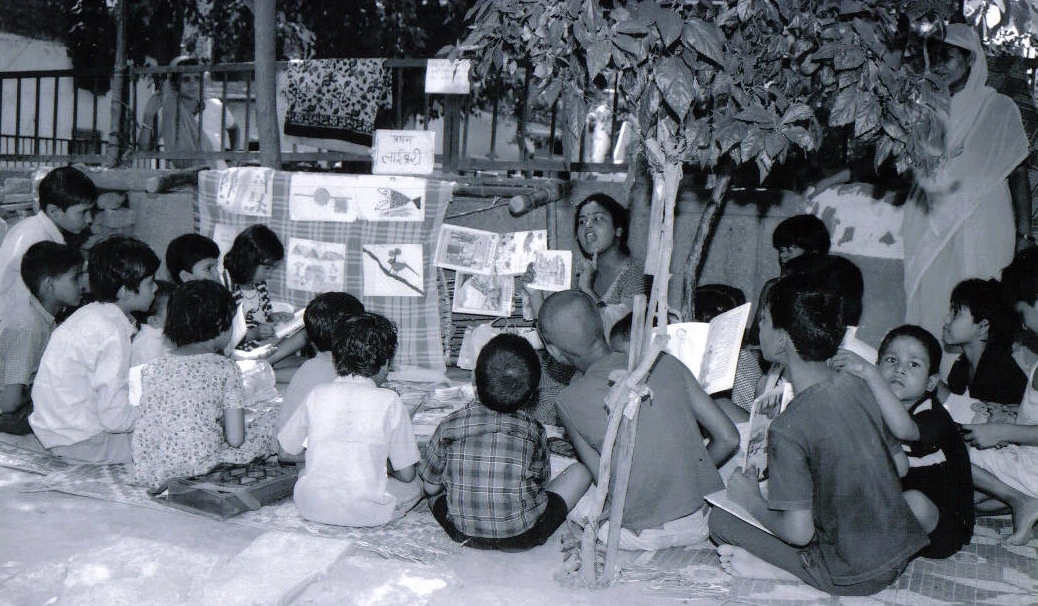
One of my favorite field examples, which may resonate with many, dates back to perhaps short of a decade in Bihar, when we were doing some expenditure-tracking surveys. We found that there was an expenditure line item called ‘building-less schools’ because there were some schools that were operating out of rented buildings or literally ‘khulle mein’ (in the open) under a tree.
These schools were waiting for their building grants to come which had got stuck because of some other paperwork, and the district office had issued an order that the school development grant be used to buy fire safety equipment. This was due to a fire that had taken place in a mid-day meal scheme, unfortunately, in Kumbakonam in Tamil Nadu, which did not have appropriate fire safety equipment.
So, on paper, this rule made a lot of sense. But when it came to be applicable in a context where a building has not been built, this completely constrained the way in which the school could operate. You could argue that a school without a building could have used that development grant to buy extra textbooks or to hire an extra teacher or whatever it felt it needed.
The absence of autonomy at the local level is part and parcel of this legalistic culture and it shapes how the higher end of the bureaucracy thinks. In many conversations with frontline officers, you hear them talk about “Abhi WhatsApp pe order aaya hai, ya MIS (Management Information System) pe order aaya hai” (We just got an order on WhatsApp or we got an order on MIS) and then the whole day gets aligned to following whatever the order says.
In Delhi, where we were doing a lot of our ethnographic work, we managed to obtain a database of government orders that went up to as many as 8,000 for the 3-4 years when we were doing intense field work. And we analyzed some of them, and you can see even just observing every day when you walk into the school how it is the order that is shaping what the teacher is going to be using, ”Aaj aapko yeh data ikhatta karna hai, kal ek lesson plan banana hai, kyunki upar jaana hai (Today you have to collate this data; tomorrow you have to make a lesson plan, all because these have to go up the hierarchy).
It (this data and information) all goes up this way and there is no feedback mechanism in the hierarchy that shares the feedback with the teachers. So, you know, they (the teachers) shrug their shoulders and say being a good teacher or being a good administrator is very much about filling up the proforma and ‘upar bhejoing it’ (sending it up).
As teachers say, “Nobody asks you any questions; nobody asks for your opinion.” And that then shapes the culture of the school in which you are responding to orders rather than actively thinking about the purpose for which you are there in the school, which is to ensure that all students are learning in a particular way.
Note: The first part of this conversation is available here.



No approved comments yet. Be the first to comment!