
Learning to stay
This piece is a reflection on an unplanned entry into the development sector, and how the journey from resisting to be a teacher-training student to education researcher and practitioner in Udaipur unfolded. Through years of basti-level work and state-level curriculum engagements, the author learned that sustaining commitment needs more than idealism. It requires humility, complexity, and persistent, even if imperfect, practice and just the need to keep working.
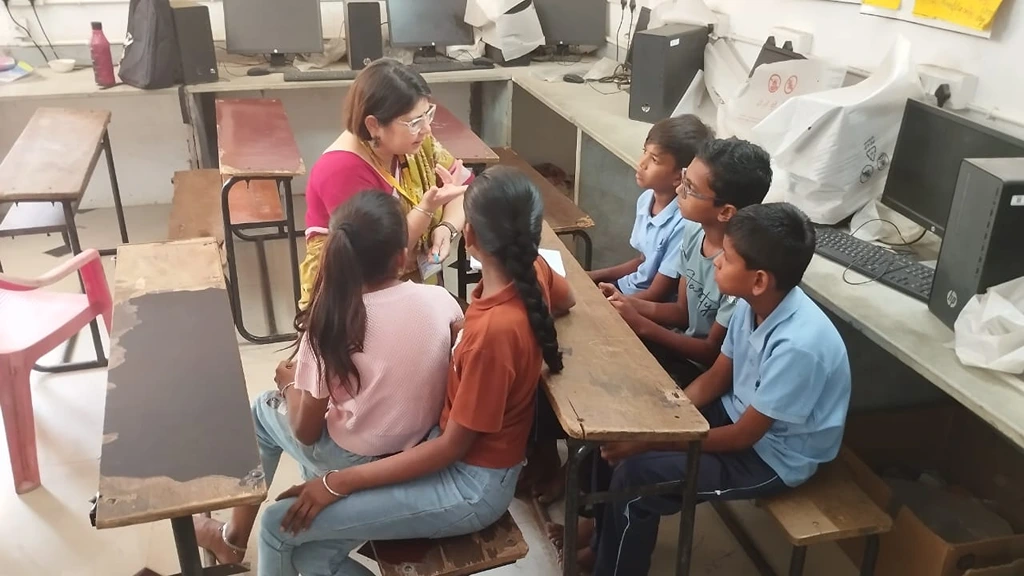
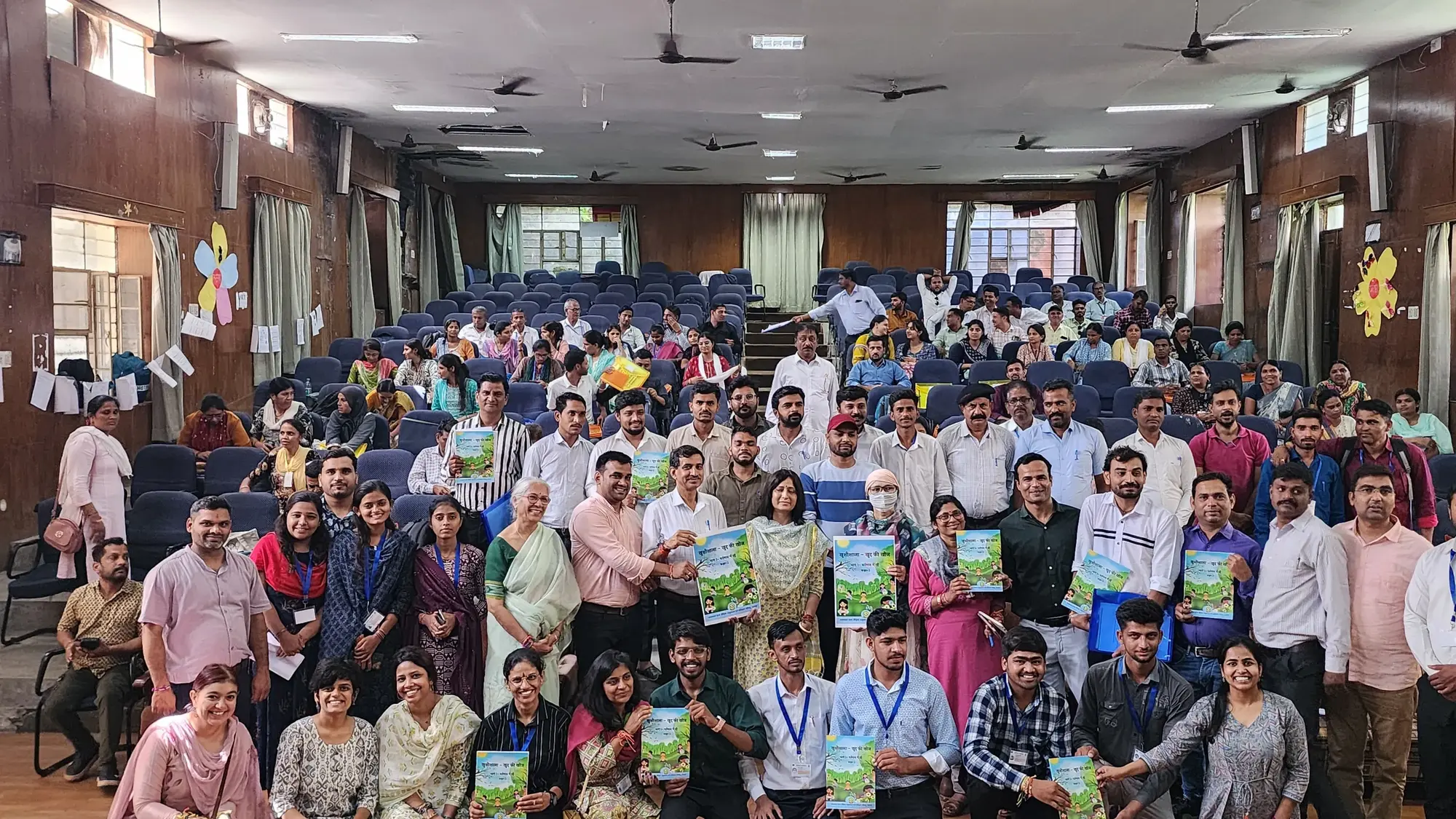
Photo credit: Anweshak Sathi Team
I did not plan to work in the development sector.
If anything, I resisted it.
What I wanted, very clearly, very earnestly, was to become an engineer, like my father. I prepared for two years for engineering entrance exams. When the results came, I had not made it to one of the ‘good’ colleges. Around the same time, I appeared for the entrance exam for a Bachelor of Elementary Education (B.El.Ed.) program, a new course then, and secured a high rank. In hindsight, this is the moment that many would call fate. At that time, it felt like failure.
Learning about education
I joined the B.El.Ed. program with a great deal of resentment. Like many young women, I had grown up surrounded by female teachers, absorbing, almost without noticing, the idea that teaching was what women should do. And when something is framed as a default, it rarely feels like a choice. Unsurprisingly, it became something I resisted.
Over time, I also realized a few more honest things about myself. I am impatient. Reasonably creative. Academically comfortable. Socially conscious. But I struggle to sustain interest in doing the same thing every day. Working with children intermittently energized me. Doing it every day did not. Teaching, in its conventional form, was probably not my calling.
And yet, toward the end of my undergraduate program, a compulsory action research project changed something. The process of framing a question, entering a field, collecting data, and slowly uncovering patterns felt electric. There was something deeply compelling about the idea that careful inquiry could reveal truths that were otherwise invisible. That was the moment I knew I wanted to stay with education, but differently.
When the MA Education program was launched at TISS, I joined the first batch. For a 22-year-old, it was an extraordinary stroke of luck. I learned from people who had not only thought deeply about education but had shaped the national discourse around it. My peers were older, more experienced, and, unlike me, had chosen the sector deliberately. Being among them forced me to confront my own accidental entry into education and to gradually make peace with it.
Beginnings of engagements with the field
A defining moment in the program was a two-weeks long organizational field project. Unsure of what I wanted to study, I was guided to work with Vidya Bhawan in Udaipur. I still remember making a call from an STD booth to confirm whether I could come. It was a tense time, the Gurjar Andolan had disrupted train routes, and people in Delhi were worried. Hardy (Hriday Kant Dewan) told me that Udaipur was peaceful and I went.
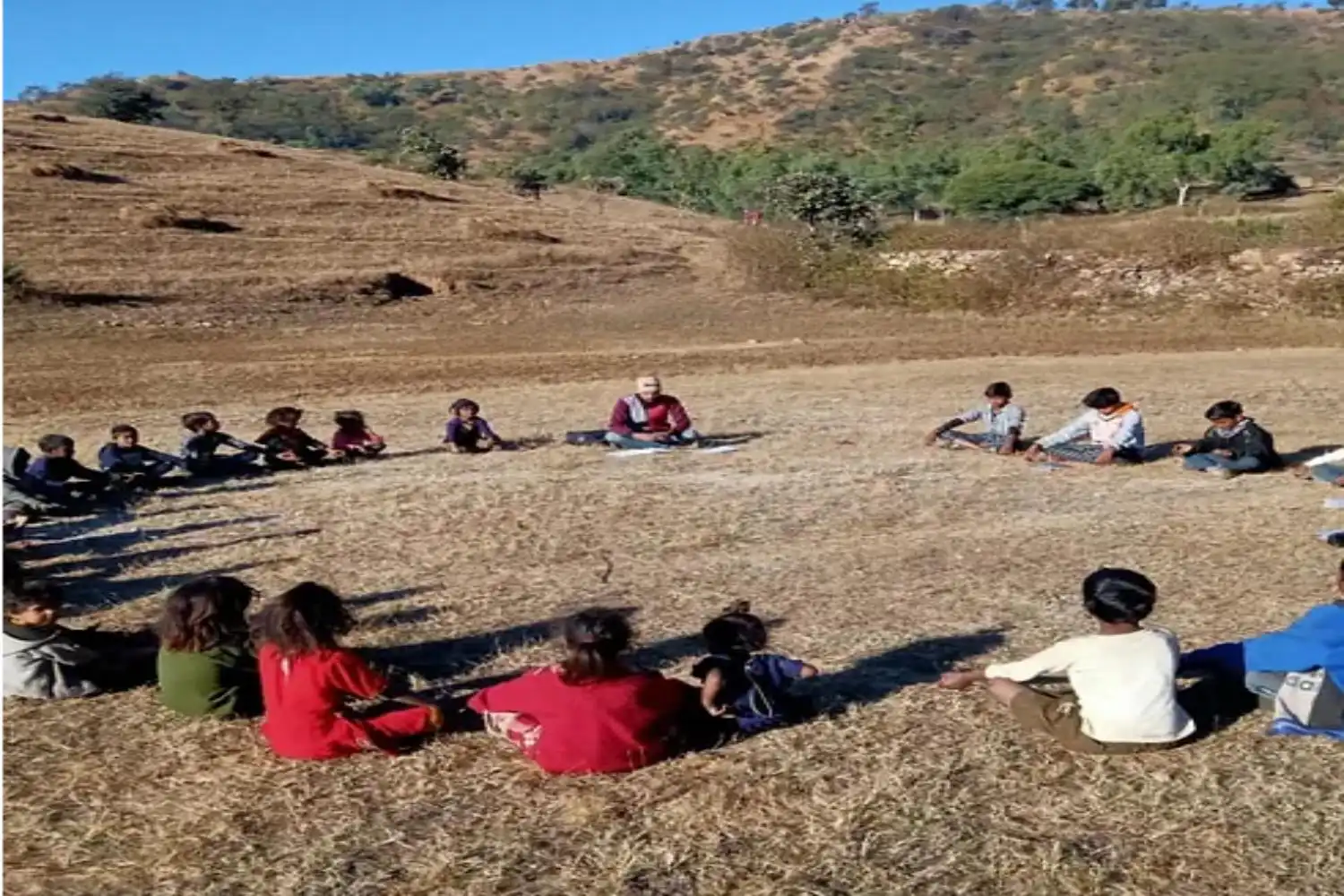
Those weeks were formative. I saw textbooks being written. I met people deeply engaged with curriculum and pedagogy. I also spent time at the Vidya Bhawan Basic School, a Gandhian institution nestled against a hillside, goats grazing in the background, and children sitting in circles for the morning assembly. It was romantic in the truest sense of the word. By the time I left, I knew I wanted to return.
I did, in 2008.
Soon after joining Vidya Bhawan, I began working on a proposal with a colleague. We conducted basti surveys across Udaipur and designed an ambitious program that treated the basti, not the school, as the unit of intervention. Government schools and low-fee private schools were included alike. The aim was simple in articulation and complex in execution. It was to ensure that every child in the basti learned well.
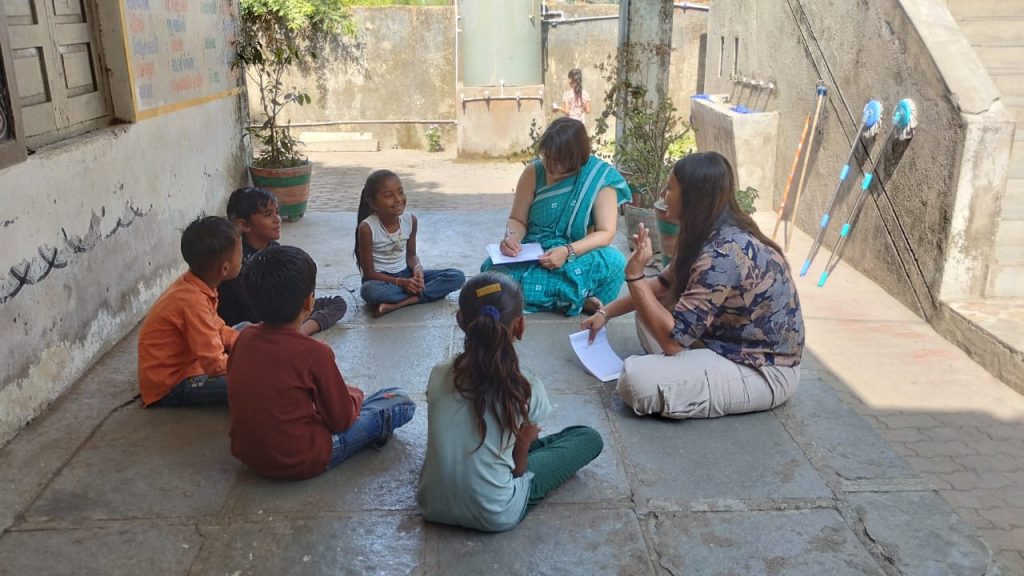
We worked with teachers. We ran direct programs for children. We also organized evening classes and created a mobile library that travelled through neighborhoods. We hired a large team. It was layered, thoughtful, and, looking back, enormously ambitious.
Those years were marked by emotional cycles. There were days of deep inspiration, when change felt possible and urgent. And there were days of exhaustion, when the scale and stubbornness of the problem felt crushing. We knew the challenges were multifaceted. We also knew our intervention was also multi-pronged. But whether it was enough, whether it could ever be enough, was a question that lingered constantly.
At the same time, Vidya Bhawan’s Resource Center was working at the state level in many states: writing textbooks, developing workbooks, and supporting teacher education reforms. This work brought a different kind of satisfaction. The outcomes were clearer. The timelines were more defined. The pressure was different. If a textbook or workbook was even marginally better because of our involvement, it felt like a tangible contribution.
Ironically, the so-called small work, the 55 schools in Udaipur, was far harder than the state-level engagements. At the basti level, there were no buffers. Teachers were often disengaged. Children had little support at home. Schools were used as dumping grounds by the community or became drinking spaces at night. Broken bottles often welcomed students in the morning.
What it takes to sustain commitment in the social sector
And then, there were the personal costs. I had left my family and moved to a smaller city. My salary was a fraction of what my peers in Delhi earned. Friends were building stable careers. I was grappling with uncertainty. My parents worried I had made a terrible mistake. There were mornings I woke up overwhelmed, asking myself whether any of this was worth it.
What kept me going was not constant hope, but gradual learning.
Over time, I understood that the development sector cannot be sustained in savior mode. This work is not about rescue or moral heroism. It is work—difficult and under-resourced, but deeply human. Like people in banks or offices, we show up, try to do our jobs well, make mistakes, learn, and do better the next day, the next week, the next month, and the next year. The meaning lies not in dramatic transformation but in thoughtful practice and honest reflections.
For those entering the development sector today, this is perhaps the hardest and most important lesson. Idealism will bring you in. It cannot be what keeps you here. What will sustain you is the ability to hold complexity without paralysis, to care without martyrdom, and to find dignity in doing the work, imperfectly, persistently, and with humility.
Related Articles

By | December 6, 2021
No approved comments yet. Be the first to comment!