
Looking back at the Surapura experience
This piece reflects on an eight-year education intervention in Surapura, Karnataka. It underscores the centrality of sustained teacher capacity building, in-class support, and community engagement in improving children’s learning outcomes over time.
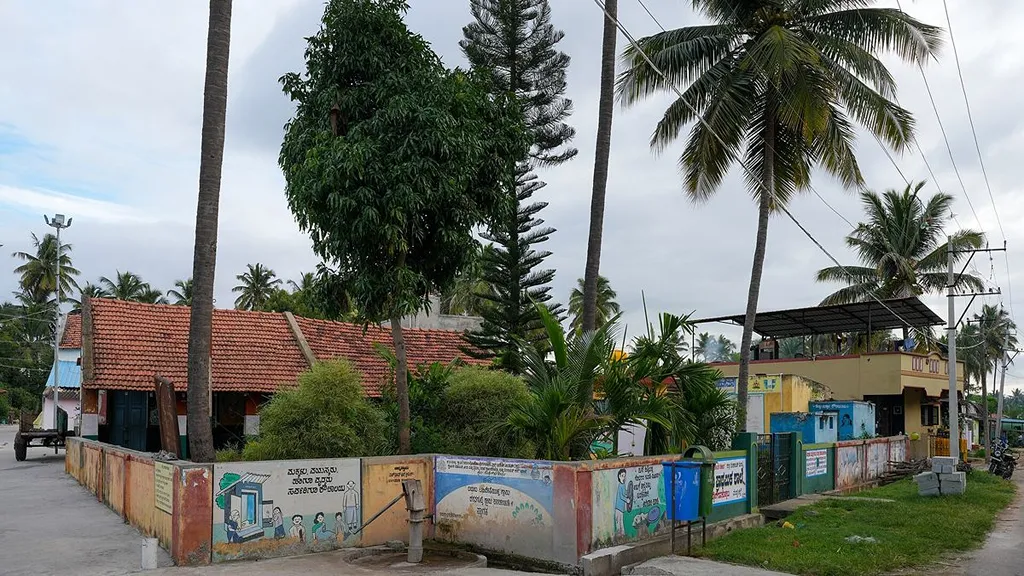
A government school in Karnataka
Photo credit: Wikimedia Commons/Timothy A. Gonsalves
I first went to Surapura in 2003. It is a remote block in Yadgir district now. Then, it was a part of Gulbarga district. According to the Nanjundappa Report, Surapura is classified as one of Karnataka’s most backward districts. In the HDI ranking, it stands at 201 out of the state’s 202 blocks.
Surpur is drought-prone and highly feudal. The presence of the erstwhile king is important in the public space even now, especially in the political arena. People owing allegiance to him are present in most of the villages, carrying out his orders.
Nali Kali process (multi-grade, multi-level, activity-based teaching learning process)
We started working in Surapura block in the year 2004. Mr. Baig, who was deputed from the education department, started the Nali Kali process in the block. Very soon, he was called back by the department, and we had to go there to continue the work started by him. We started working in the Child Friendly School Initiatives (CFSI). All the 350 schools of the block were under the CFSI.
Nali Kali was the system executed in the schools. It was new to us. We did not know this system of teaching learning, and we had nobody to handhold us. So, we decided that we will go to the schools and observe the process. Every day we would go to the schools and sit in classes where teachers would teach through the Nali Kali process. Through this focused process of observation, we were able to grasp the Nali Kali system very well.
Later, we would discuss with the teachers on the process, their preparation, the expected learning of the children, the evaluation, the gaps and the improvements needed. By now, we had developed an understanding of the Nali Kali process. We were also able to identify good teachers who can be the future resource persons. We learnt about Nali Kali from the teachers. A lot of our learning was from observing the teachers in Nali Kali classes.
We later discussed with teachers on the process, and they were very good at explaining the process and its theory. The best people to help us learn about the program were its core stakeholders. One very visible gap was the absence of a systematic review process. We designed a monthly one-day review process. The design was simple—review of the previous month, planning for the next month, and capacity building of the teachers. The goal was to support the teachers to conduct the Nali Kali classes better.
Whole school transformation plan
Our principal focus in Surapura was whole school transformation. We designed our work for whole school transformation in a simple way. We had developed the indicators of a good school. Totally, there were 240 indicators in five areas. These were school environment, classroom environment, the teaching learning process, teachers’ academic development, and community participation.
We had 25 margadarshis (guides) who would go to school and sit with the teachers’ teams and school development committee members to review the indicators. Those indicators on which work was needed in that particular school, would be planned with concrete steps, time, and responsibility. This became the school development plan (SDP).
The margadashis would visit the schools and review the SDPs. They would motivate the head teachers to complete all the indicators in the specified time. We had four coordinators to monitor the 25 margadarshis. This was a very intense and elaborate process—visiting schools every day and monitoring the 240 indicators.
Evaluation
After working for four years in the field, we did an evaluation. The evaluation was done by a third party. A team from McKinsey evaluated the CFSI in detail. The outcome shocked us. First, with such intense action on the ground with a lot of resources, human and material both, spent on the process, the evaluation result showed that there was no improvement in children’s learning levels. On the contrary, we could see a slight dip.
We tried to understand the evaluation result. We analyzed the data and came out with a few pointers for our improvement. We found that our SDP was mainly for actions outside the classrooms. We had done extremely well with the exterior of the school. We had not focused inside the classroom.
We had worked very closely with the head teacher, SDMC members, and officials from the Education Department. However, we had not concentrated on the teachers and the teaching learning process. In fact, we had neglected them. Ultimately, the teaching learning process is the most important in education. The capacity building of teachers is very important for any learning improvement program. We had not done anything significant in this area.
Teachers’ continuous capacity building process
After the evaluation, we resolved to work harder and in a more systematic way. Our work especially started focusing on teachers’ capacity building. We started undertaking demonstration classes by the margadashis and by capable teachers in the schools. These demonstration classes helped the teachers a lot.
Onsite support, inside the classroom: All our members (margadarshis) prepared themselves to help teachers in their classroom engagement. They visited schools and spent a lot of time inside the classroom with the teachers. They prepared well for the classroom teaching and did a lot of co-teaching with the teachers. They would also teach while the teachers observed them. This built a very healthy relationship with the teachers. The communication improved. There was a lot of give-and-take between the teachers and the margadarshis.
Review meetings as fulcrums of change: We improved the quality of the review meetings. We started to use these meetings to share the insights and observations from the field visits, collect the teachers’ challenges, and plan for their capacity building.
Teachers as change agents: We identified good and powerful teachers in the classroom as change agents. We focused on the capacity building of these teachers. They were not called for any seminars or workshops. They had to just teach in their schools and keep improving their teaching. Other teachers would visit these teachers and observe their classroom process. This became a very effective process of capacity building of teachers.
Teacher learning centre (TLC): We found that, in Surapura, there was no space for teachers to meet, discuss, and share their ideas. Hence, we created a space for teachers to meet. We equipped this space with a very good library and science lab. We also got materials for social science and language learning.
This started evolving into a space for teachers to meet, interact, and share their opinions. This became a learning hub for the teacher community. Initially, we organized programs. Later, the teachers themselves started organizing these. Thus, the Voluntary Teachers’ Forum was born.
The teachers started organizing weekly programs and special programs. Teachers would come to the TLC in large numbers and spend time together. They would select difficult topics in each subject and invite resource persons to deal with it. This became a very active center. The teachers then came up with an idea of starting a newsletter for teachers and headmasters. The newsletter was managed and run by the teachers themselves.
We took our teachers for exposure visit to Kerala to see good performing schools and interact with positive and committed government officials. All these activities helped build a very positive attitude among the teachers.
Capacity building of margadarshis
The members we had were recruited just to do a survey by Mr. Baig. They got continued as the program of CFSI evolved. The capacity building of the margadarshis was very crucial. They had to learn on the job and prepare themselves for the upcoming challenges. We organized many personality development programs, covering leadership, communication skills, problem solving, and crisis management.
We were not equipped to train them academically. To build their capacity in academics and give them a strong footing on learning theories and practical handholding of the teachers, we approached Hriday Kant Dewan (Hardy) from Vidya Bhawan, Udaipur. Hardy worked very closely with us for seven years. He would conduct two seven-day long workshops in a year and come for short meetings with us coordinators every quarter.
This was the greatest help the field team got to build their capacity and perform well in the field. We found a very interesting thing in these workshops. When the quality of the content is very high, the language or medium of instruction is not an issue. Brick by brick, Hardy built the capacity of the members to take up any challenges and to make the program a success!
Children’s mela on different subjects
Melas were organized in schools to showcase children’s learning. We also felt that there was a mistrust between the teachers and the community. We needed to mend this gap and create a healthy and respectful relationship between these two groups. The melas served this purpose.
The community was invited and nearby schools were also invited. The mela was not just an exhibition. It involved activity-based processes where there was ample scope for active participation in the learning process. In those days, schools would compete to conduct melas. Melas were conducted mainly in the core subjects—science, mathematics, social science, and languages.
The community members participated very actively in the melas. Children from other schools also enjoyed participating. This brought the teachers and the community members closer together. In the process, they helped each other and developed mutual respect.
Kala Jatha campaign for educating the girl child
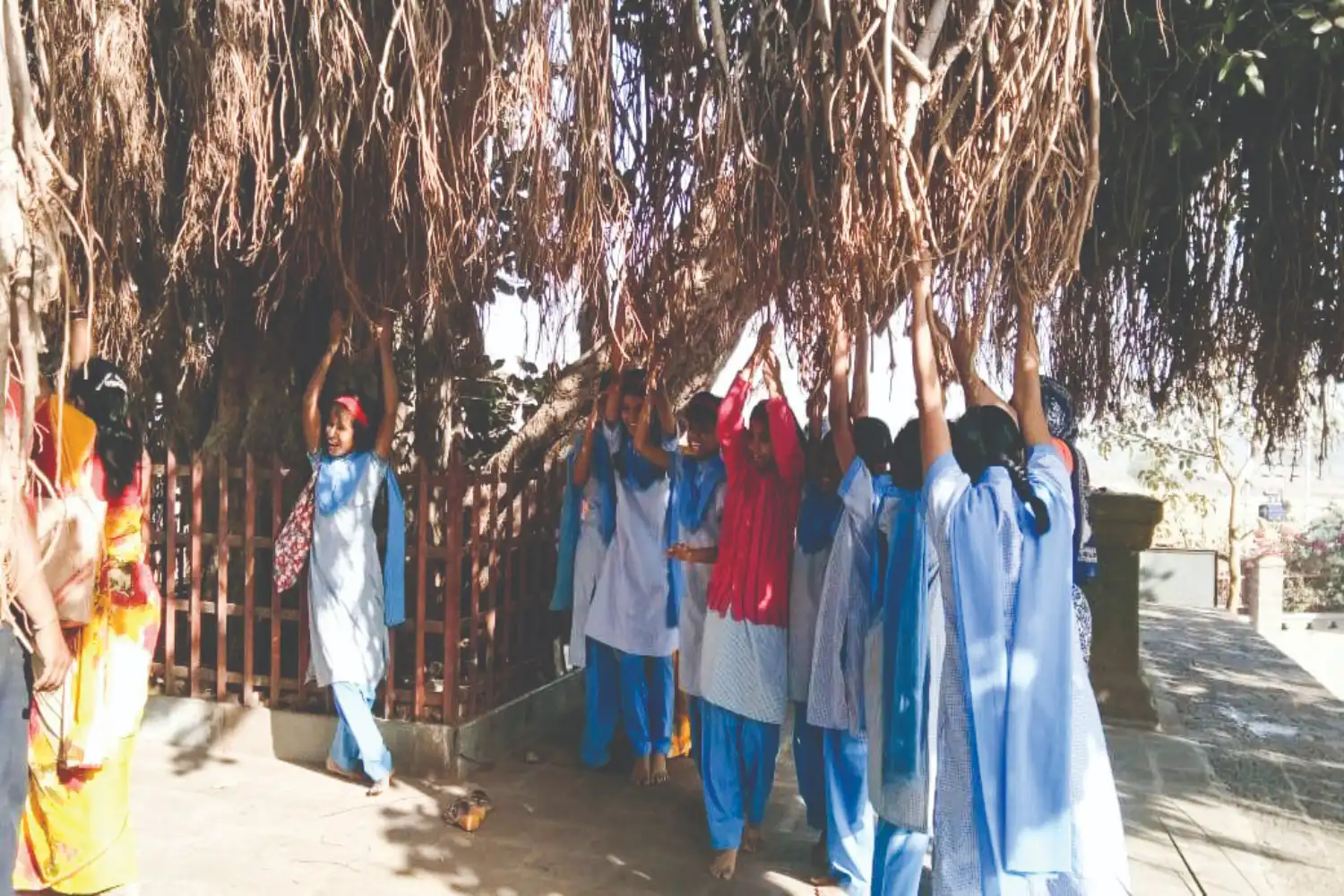
During the field visits, one of our observations was about the low percentage of girl children attending school. In addition to this, there was a high rate of drop-out amongst girls in a majority of Surapura’s villages. Hence, we planned a Kala Jatha to build awareness among the community regarding the importance of educating girls.
We worked on a script for a drama showcasing the plight of the girl child because of no education. The play would stop in between, and the sutradhar would come in and discuss with the audience. He would also invite people from the audience to complete the play. In many places, people came forward to complete the play. It was very interesting to see how people complete the play differently, creatively, and meaningfully.
There was a related exhibition of posters on gender. There was a book stall, and people were encouraged to come and read the books and if needed purchase them. We had practiced a lot of songs to be sung in the villages.
We would go to the villages in the morning. Do a prabhath phery (going round the village), collecting children, and inviting people to the exhibition and the performance meeting in the evening. The exhibition was a whole day affair, and people came and spent time in the exhibition. We were present in the exhibition as well. There would be a lot of discussion with the villagers. People came in large number to the performances. There would also be a short public meeting where a local person would speak about the importance of educating the girl child.
Then, there would be the performance, during which discussions with the villagers would take place. They would feed us at night after the performance. Different groups of the village—youths, farmers, SHG members, SDMC members, and cooperative members would come and discuss with us. In the night, future courses of action would be planned with some specific groups. The Kala Jatha visited 86 villages, covering the entire block.
Second evaluation
After eight years of the execution of the program, we conducted another evaluation. This evaluation result showed us that there has been a steady improvement in children’s learning levels. Children of all quartiles had performed well. This experience of eight years gave us some insights. They are shared below.
Education programs cannot be run for quick results. Change in education takes time. You need consistent and committed efforts for a considerably long period of time to see even a small result. For any education program, the result is always to be sought and seen in improvements in children’s learning levels. Any amount of work outside the classroom does not improve children’s learning levels. One must work inside the classroom with the teachers and children to bring the desired result.
In education programs, teachers are the most important variable to bring about change. Hence working with them is crucial. A well-thought-out teacher development program, which covers both the theory and practical classroom teaching, is necessary to bring about the needed change. Reading, meeting experts, hands-on training, and exposure to and demonstration of good classes by expert teachers are some of the ways to expose teachers to better teaching learning processes.
Along with concentration on classroom processes, a larger atmosphere of positive thinking and optimism must be built in the larger geography. Looking back at the Surapura experience, we feel it gave us a lot of insights to work with teachers at the grassroots level. It also gave us the needed knowledge, understanding, and confidence to continue working in the field of education.
Note: This article tries to capture eight years of an educational intervention in Surapura, Karnataka, by Azim Premji Foundation.
No approved comments yet. Be the first to comment!