
Inclusive education works better for typical kids too
In her perceptively written piece, Jo Chopra McGowan shows how inclusive education is good for typical children as well, and not only for those battling multiple challenges, as commonly perceived.
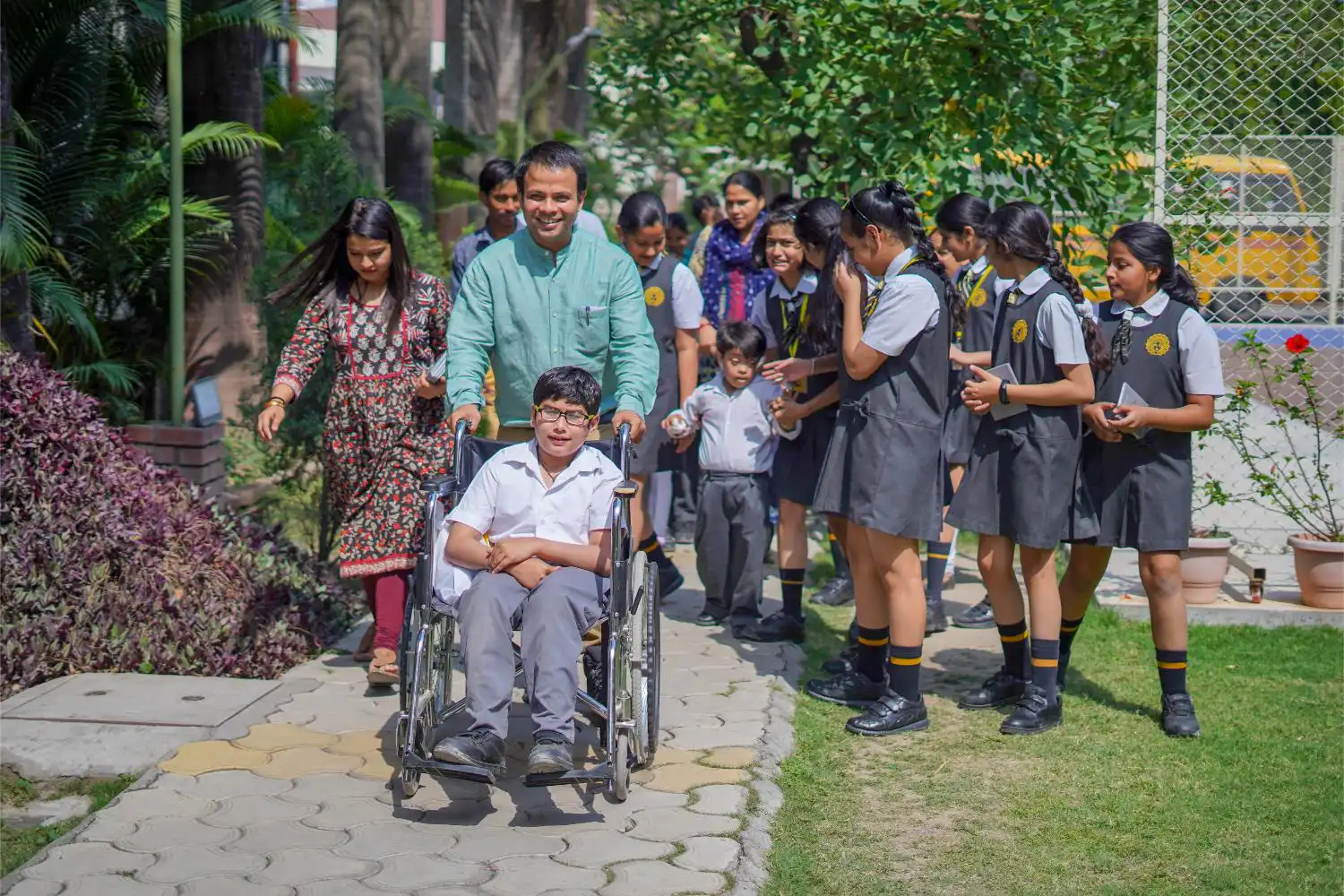
At Latika Roy Foundation, we believe that when we plan for the most vulnerable, the world works better for everyone. It is one of those things we say so often that it has become a truism for us—almost too obvious. But we call them truisms because they are true. Here is one example of how this particular truism works.
Many parents, many teachers, and many school principals fear that bringing disabled children into mainstream classrooms will lower educational standards for the typical students. The reverse is true.
Look around the room at any meeting of educated people. Look around in your own office. A minimum of 30% of the people you see will be wearing glasses, contact lenses, or have had corrective surgery. You can ask for a show of hands to check on the ones who are not obvious. No one minds admitting to the surgery or the contacts because this is a disability which has been successfully mainstreamed. There is no stigma.
But now, go into a government school. I can guarantee you that you will not find more than one or two children (if that) wearing glasses. I have confirmed this again and again. What happens when an obviously visually impaired child comes into that classroom? The teacher, finding that writing on the board or referring only to written text in a book is not working for her student, has to do things differently. Maybe she brings that child right up to the front row so she can be sure they are following what she is saying. Maybe she assigns another child the task of verbally conveying what she has written on the board. Maybe she asks them to repeat back what she has said. Whatever she does, she has recognized that every child does not learn the same way. Now that her class of 50 kids has one child who is blind, she knows that there are 15 more who are struggling with vision problems in some way.
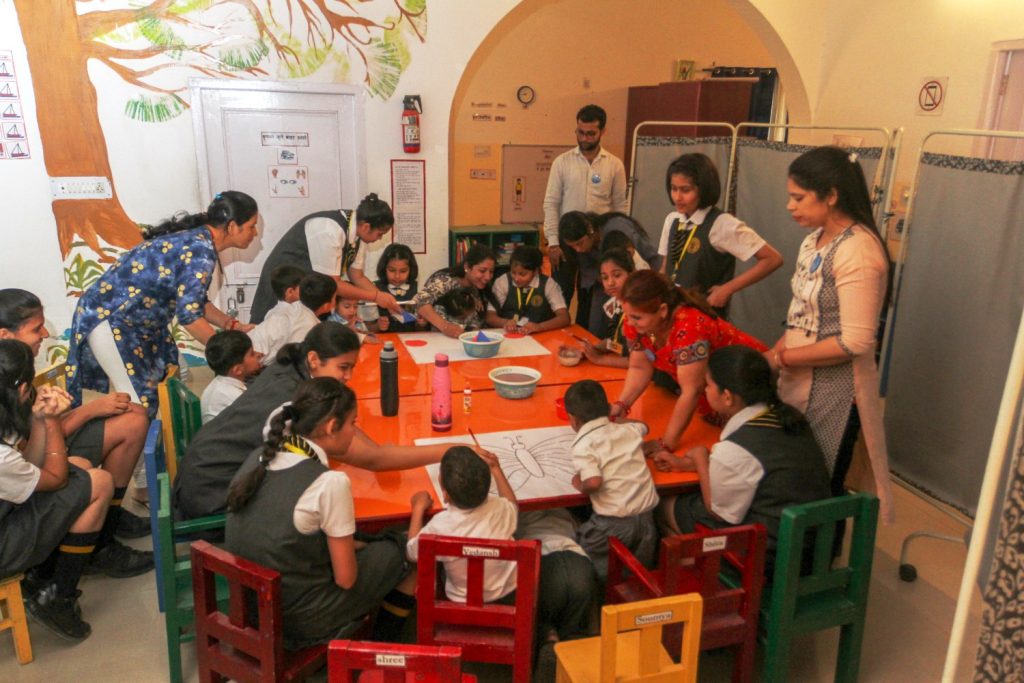
Once she has made that breakthrough in her thinking, she may start to look at the other children in her classroom with more compassion. She may start to realize that some of her kids actually cannot hear what she is saying because they were born with an undetected hearing loss or they have had repeated ear infections which were not treated effectively. They are not deliberately ignoring her.
She may begin to understand that asking a class of 6-year-olds to sit still for 45 minutes is asking too much, or that the child who keeps putting their hands over their ears is not being naughty. They are feeling overwhelmed by the noise and the chaos of being in a crowded room with 50 other children. That is the power of inclusive education.
The Latika Roy Foundation is a three-decade-old NGO based in Dehradun. We started as a school for disabled children because my own daughter was not welcome at the school her elder brother and sister attended. I did not want her to go to a special school. But 30 years ago, there was no other choice. Today, while there are more choices for disabled children, these are still far from being enough.
So, a large part of our work is training mainstream teachers to be more accepting of differences and to cater to all kinds of learners. We continue to provide specialized education options for children with ASD, Down syndrome, and Cerebral Palsy, along with the physical, behavioral, and occupational therapies they need. But more and more, we are successfully transitioning kids into mainstream classrooms.
When teachers and principals have the right attitude, it is really not that difficult. True inclusion means giving every child the benefit of the doubt. We assume that every child wants to learn, that they are hardwired for learning, and that if they are struggling, it is up to us to identify the problem and work around it. There is always a workaround.
When we give teachers strategies to help the particular child they are worried about, they often find that the same strategies do wonders for the rest of the children. I remember Vishal, a class 3 student in a government school in Delhi. Vishal used to shout out answers whenever he felt like it, never waiting to be called on and often answering questions that had not even been asked.
There could be many reasons for this, but one of them was that Vishal did not understand how to wait for his turn. We suggested that his teacher make up a rule that he could only speak when he was holding a ball that she would toss to him if she wanted him to answer. It became so popular that all the children wanted to hold the ball while they were answering.
For Sara, who fidgeted constantly, making it difficult for her to concentrate, we suggested giving her a squeezy toy to hold. The excess energy was thus channeled, and she was better able to focus.
Aslam used to constantly ask to leave the class on one pretext or another. If he was not given permission, he would just walk out anyway. We suggested that the teacher present him with three ‘get out of class’ tickets. Any time he felt he needed a break, he could simply place one of the tickets on her desk and leave. No questions asked, no explanations required. But he only had three tickets. She explained that he should save the tickets for when he really, really needed to get out. Because if he used them all in the first 10 minutes, he would be stuck if later in the class he felt desperate.
The knowledge that he had control in his own hands was remarkably liberating for Aslam. As the days went on, he was able to wait longer and longer without leaving the room. Just knowing he could leave if he wanted to allowed him to relax.
For Aslam, being forced to sit in class with no hope of escape felt like being thrown in jail for life. Paradoxically, by giving him an actual escape plan, he stopped needing to escape. For other children, extra time to complete assignments, having a scribe, or being allowed to take tests orally can all be helpful.
Yet, one of the most common responses we get when we talk about such strategies for disabled kids is outrage on behalf of the other children. “It is not fair to them,” people insist. The belief in fairness is deeply held but often misunderstood. Fairness does not mean that everyone gets the same. Fairness means that everyone gets what they need.
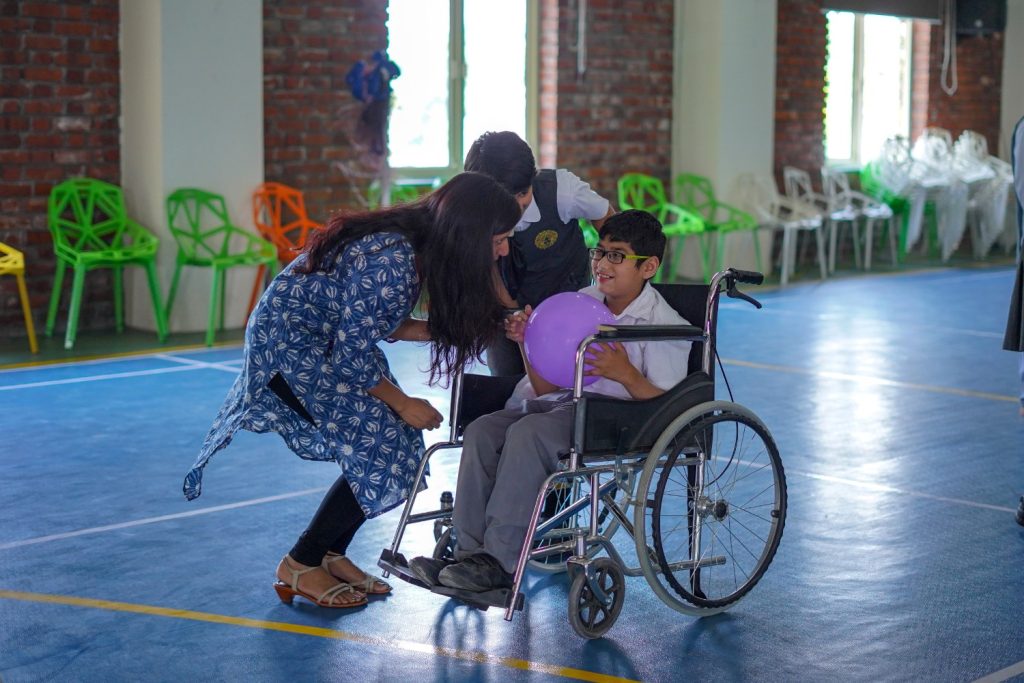
Inclusion helps us understand the truth about fairness because the needs of disabled children are more obvious than those of typical kids. It would be ridiculous to deny Moy Moy the wheelchair she needs because we are not giving all the other kids wheelchairs.
The other kids do not need wheelchairs. And if a child does not need a wheelchair, but extra time, alternate testing arrangements, or a ‘get out of class’ ticket, that is what they should get. Whatever it takes.
Inclusion moves us out of a competitive, anxious view of education focused on marks, seats, and the dog-eat-dog world of getting into IITs. It allows us to see education not as a transaction for material gain with winners and losers, but as a process of opening up the world for every child, at a pace that is enjoyable, and in a style designed for learning, not crushing the opposition.
Like the ramp that allows wheelchairs, prams, and suitcases easy access to buildings, and the visual timetable at traffic lights that allows us to calm down while waiting for the green signal, there is no downside to inclusion.
So the next time you enjoy an audiobook, read captions on a TV news broadcast, or use Siri on your smart phone, thank a disabled person. While such innovations were created for them, we are all on the inclusion gravy train now.

Related Articles
By | December 6, 2021
By | July 18, 2023
No approved comments yet. Be the first to comment!