
Reflections on facilitating cultural change toward greater organizational well-being
In his article titled “Reflections on facilitating cultural change toward greater organizational well-being”, Shashi Nair discusses issues related to effective facilitation of well-being in the workplace.
Introduction
The article titled “Well-being at work” by Pramod Athalye, being published in this issue of Samuhik Pahal makes three important points. First, if an employee is to be in the well-being zone, they would experience harmony with the job, team and leaders.
Second, organizations must get most employees into the well-being zone. They must actively nurture and sustain this over time by living the culture they aspire to.
Third, they must authentically cultivate positive individual and collective interiority in those working in the organization.
How is this to be done?
One critical ability is to facilitate cultural change in organizations, and that too at the level of individual and cultural interiority. This is truly very complex work. No two cases are alike. It is something I have been involved in, as an insider – as a team lead, and as a CEO. I have also been involved as an external facilitator.
In the latter capacity, it is my belief that success depends primarily on three factors. These include the following. First, the right change team to work with, especially the client leadership. Second, lots of luck. And third, effective facilitation. In this article, I would like to share my reflections on the last of these three.
Effective facilitation
Before talking about how to think about effective facilitation, I want to talk about how not to. Facilitating cultural change is not like engineering, where every component is designed, assembled and controlled to perform in a predictable way. In engineering, if you want a bridge to span a river, you calculate loads, select materials, and construct according to exact specifications to achieve the desired outcome.
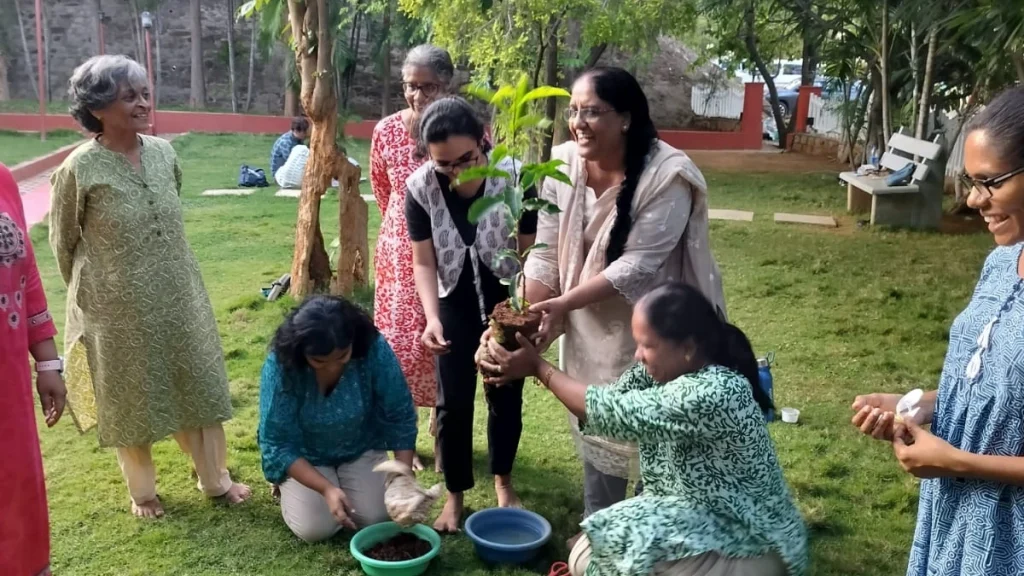
But culture isn’t mechanical. It doesn’t conform to blueprints or rigid plans. Instead, it’s more like gardening. A gardener cannot force plants to grow. Growth is a natural, organic process. It arises from within the plants themselves. The gardener’s role is to understand this organic process and create enabling conditions—preparing the soil, providing water, ensuring sunlight, and removing weeds—so that growth can flourish. Similarly, facilitating cultural change is about creating the right environment for transformation. It involves nurturing trust, fostering openness, and addressing barriers. This can support the organization’s culture to evolve naturally from within the interiority of its people.
If effective facilitation is more like gardening, what might be important aspects to focus on? Three things come to mind. First, the interior conditions of the facilitator of cultural change. Second, engaging with the change team as whole human beings. And third, nurturing the energy for cultural change.
The interior conditions of the facilitator
I have been inspired by Bill O’Brien1 , who beautifully argues that “The success of an intervention, depends on the interior conditions of the intervenor”. The role of the facilitator is to create safe spaces where participants can be open, vulnerable and authentic – collectively. To my mind this calls for four interior conditions of the facilitator.
Focus on the process and do not worry about the outcomes:
This was a big unlearning for me. My background predisposes me to plan meticulously for outcomes, designing a series of steps to achieve them.
However, assuming I can control outcomes in this way would be lunacy! Cultural change is a complex, dynamic process. Here individuals with diverse desires and life experiences come together. They often do so cautiously, sometimes with suspicion. They share and respond to one another. Sometimes they trigger one another’s emotions along the way.
These interactions are organic and unpredictable. I cannot foresee how the conversation, and emotional energy will unfold. Instead, my role is to focus on creating the conditions for meaningful exploration, and to trust that the process will lead to the outcomes that need to emerge.
Show up from a space of love and compassion:
I understand love and compassion as a deep, warm-hearted desire for others to thrive and flourish, and not suffer. I try to hold participants gently in my heart, creating a sense of safety and care.
It allows them to feel my genuine concern for their well-being. This, in turn, fosters openness and trust.
It is this trust that becomes the foundation for meaningful conversations and authentic explorations. This paves the way for cultural change that supports their flourishing.
Live in the present moment:
This has been a transformative practice for me – one that I am yet to fully master! When I am fully present, I sense not just my own thoughts and emotions but also the subtle dynamics within the group.
This grounded presence, connects me deeply to my commitment to the success of the change team. It enables me to respond authentically and intuitively to what emerges.
Being present allows me to notice possibilities I might otherwise overlook, to venture curiously into unexpected “rabbit holes” that often reveal something surprising and valuable. This creates space for curiosity and openness, allowing the process to flow naturally rather than forcing it forward.
I have also found that living in the present slows conversations down in a much needed way. In today’s fast-paced world, this slower pace creates room for reflection and thoughtful engagement. This helps participants connect more deeply with themselves and with one another.
Let the universe conspire to make you successful:
As a facilitator, I have discovered the power of aligning with what I can only describe as the flow of the universe. I still set goals and chart logical steps toward them. However, over time, I have come to see this approach as rigid and, in this work, limiting. It can blind me to unexpected opportunities that lead to outcomes far beyond what I could have planned for. Instead, I have started practicing something different: setting clear intentions and then living with open awareness. I remain attuned to the possibilities that arise—synchronicities that seem to appear out of nowhere. Whether it’s a chance conversation, a sudden idea, or an unforeseen connection, the universe seems to conspire to make things happen when I remain open and present.
I don’t understand how it works. However, it works astonishingly well. This shift has been humbling and, frankly, a little mysterious. But it has transformed the way I approach both life and work.
Engaging with the change team as whole human beings
There was a time in my career when I used to think that the role of my body was to carry my very important head from one important meeting to another. Some 35,000 meetings later, I can hardly recall anything particularly important! It’s a humorous reflection, that when shared, captures a deeper truth for my participants. So many of us live in our heads, disconnected from the wisdom and signals of our bodies.
This tendency to prioritize the cognitive over the embodied is something I have observed in many professionals. This is particularly the case in high-stakes environments. We live in a world that often rewards intellect and rationality. Yet, our actions are deeply influenced by our emotions. These are experienced in and through the body. To engage meaningfully with people, especially in the context of cultural change, it’s vital to address the whole human being—the mind, the body, and the emotions that drive them.
Why engage the whole human being?
Emotions play a profound role in shaping our actions and interactions. They are closely tied to our motivations, aspirations, and sense of purpose.
Yet, in many organizations, cultural norms suppress emotional authenticity. This creates an environment where fear, anxiety and insecurities flourish. In response, we build identities or masks to shield ourselves from judgment and to appear “acceptable”.
However, these masks come at a cost. They prevent us from connecting deeply with others and with ourselves. Vulnerability— the willingness to set aside these masks and share authentically—is key to breaking through this disconnect. It allows us to delayer, reconnect with our inner selves, and form genuine bonds with others.
The role of embodied practices
One way to help people reconnect with themselves is through embodied practices. These include drawing, music, bodywork, and guided visualization.
For example, in a session, I might guide participants through the “20-minute dance” from the Presencing Institute. I may invite participants to let go of cognitive control and move in response to their body’s impulses. All of these allow their bodies to lead and their minds to follow.
Such practices shift participants out of their habitual mental chatter. These are often driven by fears and insecurities.
These practices can lead the participants from their mental chatter into a space of sensing and presencing new possibilities. By doing so, they begin to listen to what their bodies are telling them and tap into a deeper reservoir of wisdom and emotional authenticity.
Creating a safe space for vulnerability
As a facilitator, I see it as my responsibility to model vulnerability. Sharing stories of my own missteps, embarrassments, or challenges can help create a space where participants feel safe to open up. My role is not to be perfect but to be authentic.
In fostering vulnerability within the group, I have found it helpful to work, where required, with leadership to ensure they create a supportive and non-judgmental environment. Sharing my own vulnerabilities early on to set the tone also helps.
Giving participants the time and space to share at their own pace, and appreciating even the smallest steps toward openness is an important part of this process. When participants share vulnerably, it is critical to acknowledge and thank them.
This reinforces the safety of the space. It goes to the heart of individual interiority that the article “Well-being in the workplace” talks about!
From individual to collective vulnerability
As vulnerability begins to emerge, it becomes an experience of exploring collective interiority. One person’s courage inspires another. The group begins to form a shared emotional landscape. This deepens trust. It also strengthens the bonds among team members. This process creates a foundation for authentic collaboration.
I see collective vulnerability as a catalyst for cultural transformation. By acknowledging and appreciating it, I aim to nurture its organic growth.
For instance, inviting the group to reflect on the value of these vulnerable moments— what they learned, how it changed their dynamics—can help sustain this openness over time. Together, the team can explore practices to keep this spirit alive.
Nurturing the energy for cultural change
Bringing about cultural change to support organizational well-being is a journey that takes time and effort. Along the way, the energy of the change team becomes a vital resource. Without sufficient energy, it becomes difficult to navigate the inevitable obstacles and setbacks. Nurturing this energy requires intention, attention and knowhow.
The energy to begin the journey comes from values—those deeply meaningful drivers that matter to us at a personal level. Deeply held values (as against nice-sounding words) compel us to take action. This is true even when the path ahead is difficult, because our deeply held values speak to what truly matters.
For a change team, tapping into individual values and aligning them to form a shared purpose creates a sense of belonging and collective commitment. This shared purpose serves as an anchor. It provides strength when challenges arise.
As the implementation process unfolds, real and perceived obstacles will drain energy, while moments of success will replenish it. The journey is not uniform. Team members will experience varying levels of energy and motivation at different times.
Intentionally building a “bank of collective energy” becomes essential. This collective energy allows the team to persevere through setbacks and continue moving forward.
Patience is another critical element. It is natural to want immediate results. However, cultural change, like growth in nature, takes time.
I am reminded of a story from my childhood. My mother had invited neighbourhood girls to make ice cream in our fridge. One girl, in her excitement, opened the fridge every ten minutes to check if the ice cream had formed.
It’s amusing in hindsight. However, it highlights an important lesson: trust the process. Just as digging up a seed daily to check if it is growing can hinder its growth, constantly questioning progress can sap the team’s energy.
The greatest challenge in nurturing the collective energy for cultural change is handling the insecurity of “are we doing it right”. But how do we trust the process when we lack prior experience to assure us it will work?
This is where expertise becomes crucial. Expertise—whether internal or external— provides guidance and confidence. Without it, the change team requires significantly more energy to stay the course. Teams with less expertise may need additional external support to help them navigate the journey effectively.
Ultimately, nurturing energy for cultural change involves staying grounded in values. It also needs keeping expectations realistic, embracing patience, and seeking the right support. It is through this balance that change teams can sustain their commitment and create lasting transformation.
For those who want something more concrete…
At Well@Work Lab, we are constantly prototyping, implementing and refining these ideas. We follow a three-stage process, to support organizations through this journey.
A series of conversations with leaders to mutually reach go/no-go through:
This involves Well@Work Lab clearly understanding the current situation and desired change. Leaders and Well@Work Lab then assess our ability in facilitating this change. Following this, Well@Work Lab assesses leader commitment in investing, scaling and sustaining this change.
Leaders then create a pilot change team and a compelling case for change to communicate.
A weekend off-site retreat of the pilot team and their leaders:
This is facilitated by Well@ Work Lab members. The retreat consists of a series of non-cognitive experiences that help participants connect with their own interiority at the mind-heart-body level.
Our aim is to help them get in authentic touch with their range of inner work-related beliefs, purpose, interpersonal relations, expectations, challenges, aspirations, vulnerabilities, and express them in a safe space. This could help them connect more authentically with fellow participants.
The goal is to create a common awareness of the need for individual and collective change. We end the retreat with their heartfelt commitment to catalyzing this change through a series of behavioural shift prototypes to be tried out by retreat subteams back at work.
Creating the cultural prototype in the workplace:
The sub-teams implement, refine, and try out their behavioural shift prototypes within themselves and non-participant colleagues. Well@Work Lab facilitates weekly reviews of their experience.
It also helps them build and try out these and several other prototypes in sprints over several months. During this process, Well@ Work Lab also supports them manage their energy for change.
Organization leaders then scale up the cultural prototype and sustain it.
Some closing reflections
To me, facilitating cultural change toward greater organizational well-being is all about working with teams at the level of positive individual and collective interiority. It is something that is very essential for organizations to be able to get most employees into the well-being zone, and actively nurture and sustain this over time by living the culture they aspire to.
Also, if I have given the impression that I have mastered such facilitation, I must set things right. I am very much a work in progress! These reflections are a mix of what I have learned over years of co-facilitation with some amazing people, and what continues to emerge from collaborative thinking.
The work on my interior conditions, the work of engaging with whole human beings, and the work of nurturing energy for cultural change is not static. It evolves as we grow in our understanding of what it means to create environments where people can show up as their authentic selves and do the real work of bringing cultural change in their teams and organizations. For me, this work is both a privilege and an ongoing journey.
Endnotes
1. “Collective mindfulness: the leader’s new work” by Otto Scharmer, February 5, 2014
A note on co-authoring: ChatGPT and I thoroughly enjoyed this collaboration! I have been leading teams and organizations since 1984. These reflections build on my experiences, trials, tribulations and some successes over the years. The collaboration was an iterative and dynamic exchange, in which we both found working together a truly enriching experience. ChatGPT asked me questions, made suggestions, building beautifully on my experiences with additional perspectives. Together, we both feel we have co-created something that feels authentic and mutually fulfilling.

Related Articles
By | October 30, 2025
By | April 28, 2026
No approved comments yet. Be the first to comment!